Sculpted and Cast
Maria Theresa Monument (1888)
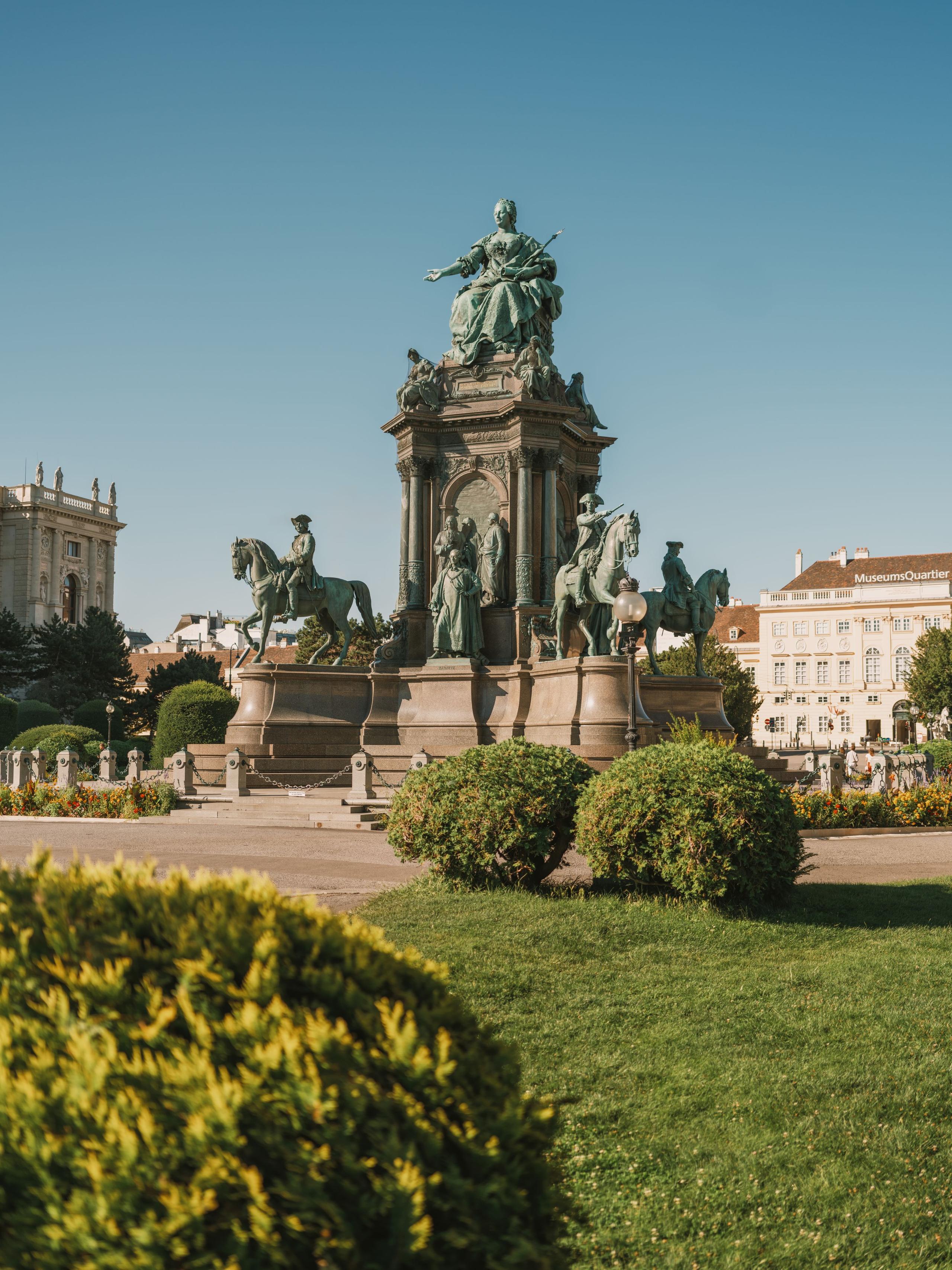
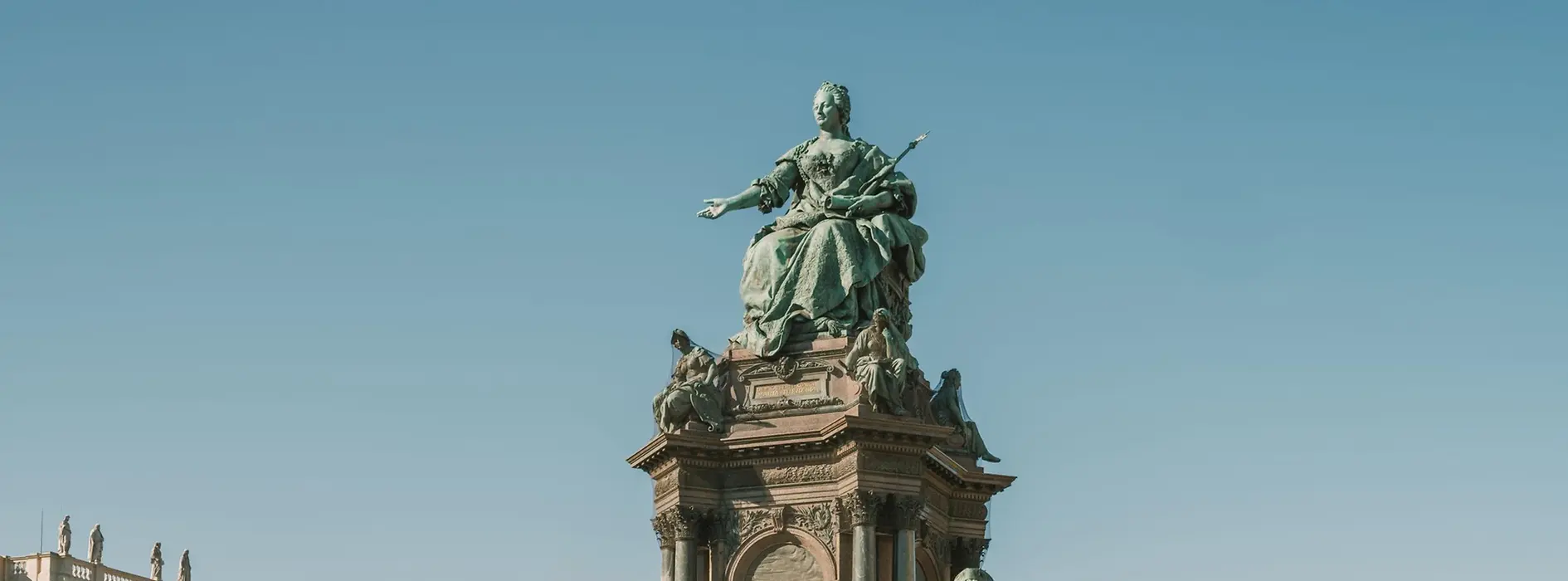
Naturally, as the capital of a vast empire for hundreds of years, Vienna has more than its fair share of historical landmarks dedicated to rulers. But one of them eclipses all the others: the 20-meter-high monument to Maria Theresa between the Kunsthistorisches and the Naturhistorisches Museum. She is surrounded by statesmen, generals, scientists and artists of her day. The largest, most extravagant and most expensive of all the Habsburg monuments, it was commissioned by Maria Theresa’s great-great-grandson, Franz Joseph. The area at her feet has long been a popular urban meeting place. Complete with fountains, manicured boxtrees and park benches, against a backdrop of pure imperial splendor.
1st district, Maria-Theresien-Platz
Sämann Statue (1929)
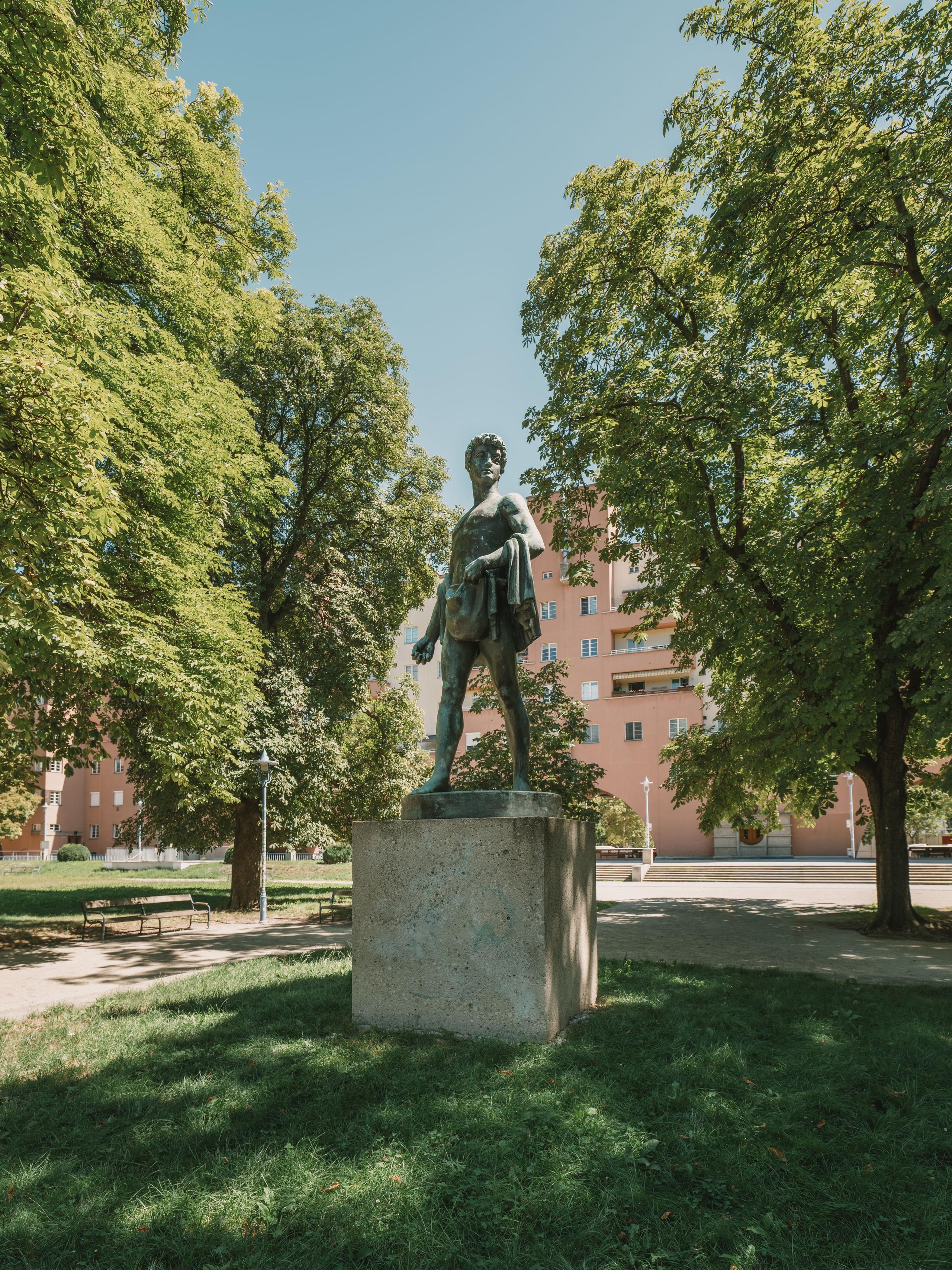
After the fall of the monarchy, the social-democratic city council set about reshaping Vienna’s cityscape, with municipal housing as its calling card. Art was integrated into these developments, too: it served as a way to bring art closer to the city’s population and make a political (i.e. social democratic) statement. The Karl-Marx-Hof – the longest contiguous residential complex in the world, extending for more than a kilometer – is a prime example. The main courtyard in the center features the Sämann (seed sower) statue, a bronze figure by Otto Hofner. A symbol of social progress and new beginnings, it also adorned Austria’s one-schilling coin for a time.
19th district, Heiligenstädter Strasse 82–92
Karl Lueger Monument (1926)
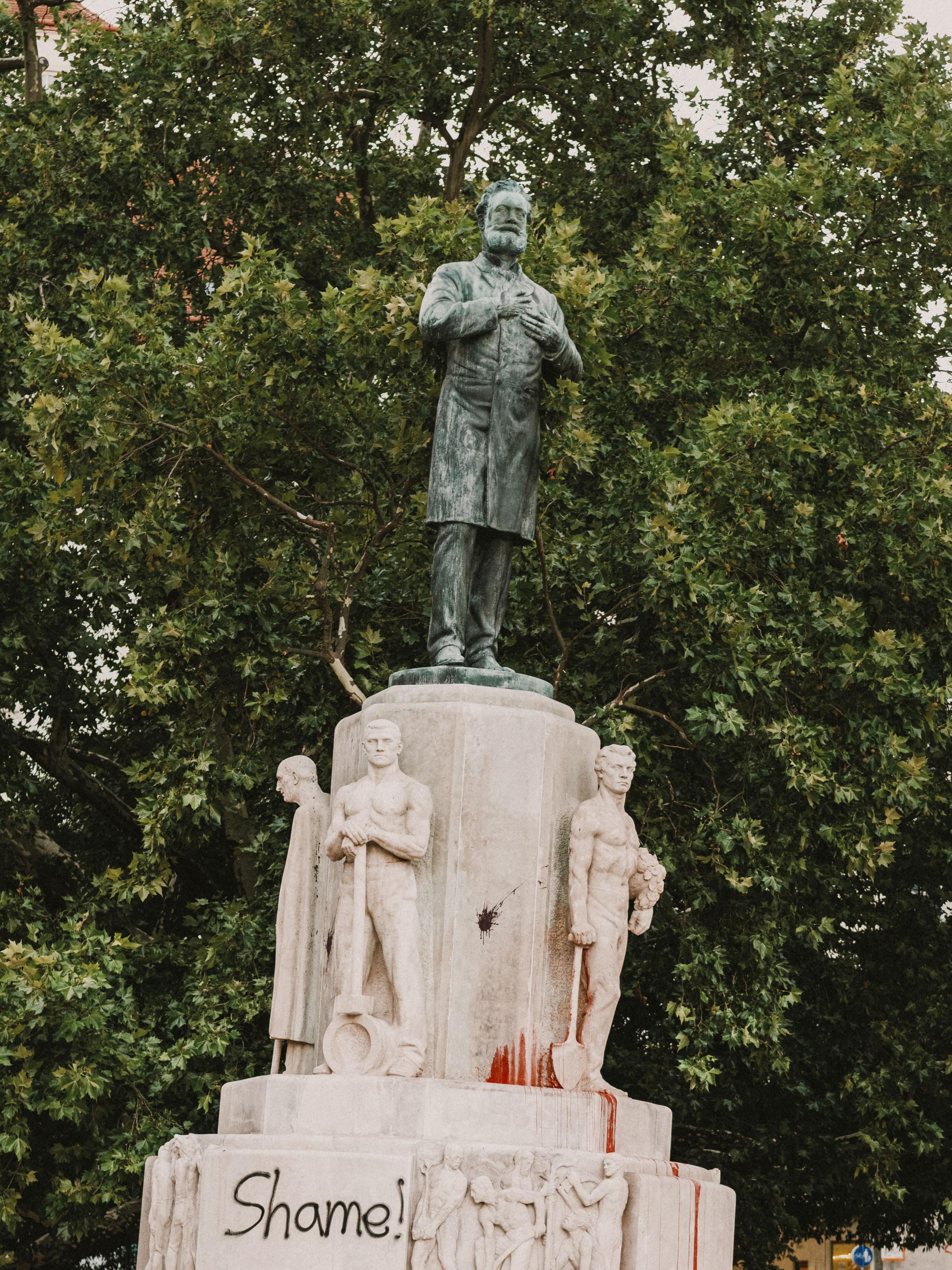
Of the 1,000-plus classical monuments and statues found in public spaces in Vienna, none continues to provoke as much debate as the sculpture of the city’s former Mayor Karl Lueger at Stubentor along the Ringstraße boulevard. Between 1897 and 1910, he played a part in modernizing Vienna. But he was also an avowed anti-Semite. As a result, for decades the statue has been a magnet for criticism. After many years of debate and defacement, the monument was artistically reconceptualized and tilted – since mid-2026, the bronze Lueger figure and multi-tiered pedestal have stood at an angle of 3.5 degrees. Meanwhile, critics continue to leave unmistakable messages on the monument.
1st district, Dr.-Karl-Lueger-Platz
Memorial against War and Fascism (1988)
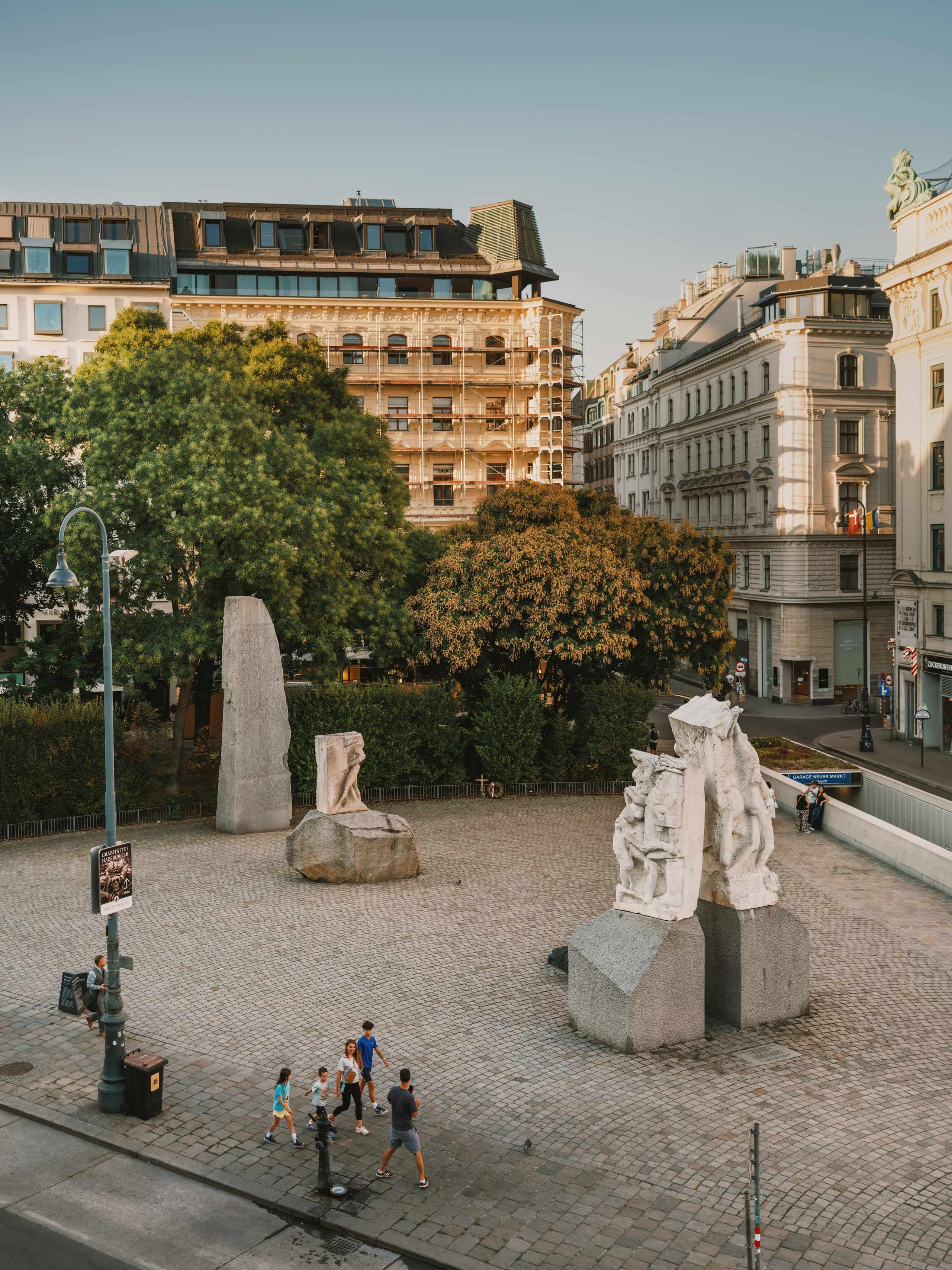
Many monuments are central to a society’s culture of remembrance and serve as a form of collective memory. Created for the city by sculptor Alfred Hrdlicka, one example can be found in the heart of Vienna, next to the Albertina, the Vienna State Opera and the Tourist-Info office at Albertinaplatz. It is located on the site of the former Philipphof apartment building, which was completely destroyed in a bombing raid in 1945, with hundreds of people buried alive under the rubble. This memorial also caused plenty of controversy, too: for some it was too extreme or too ugly, while others felt it was too restrained. The walk-through structure comprises four elements: a split stone gateway called “The Gate of Violence”, “The Street-Washing Jew” depicting a kneeling bronze figure, a marble sculpture entitled “Orpheus Enters Hades”, and the “Stone of the Republic”.
1st district, Helmut-Zilk-Platz
Group of Sculptures by Franz West (2022)
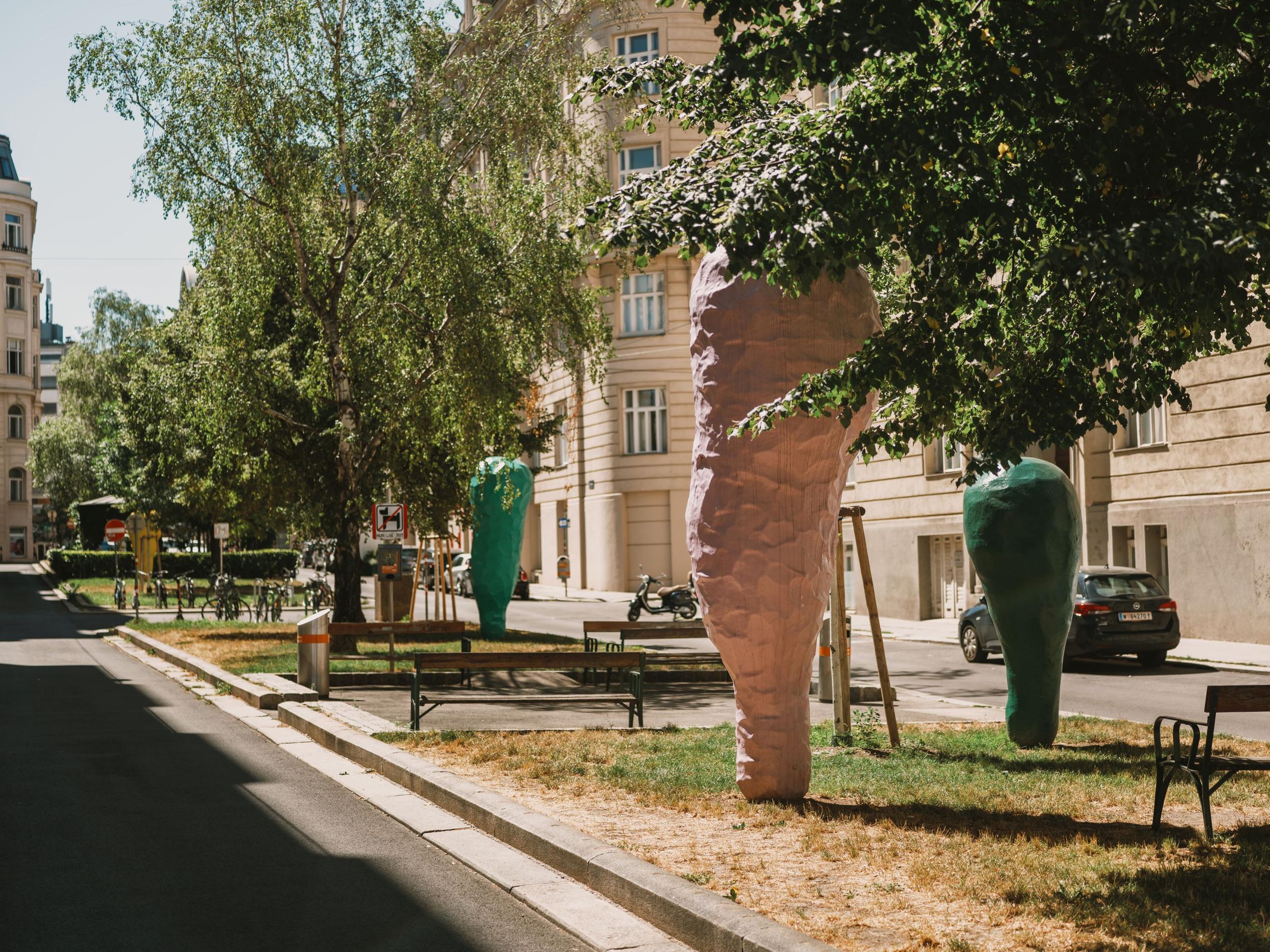
Sculptures do more than bring large spaces to life. In Vienna, they also energize individual local neighborhoods – known locally as Grätzel – in particularly distinctive ways. An eye-catching example can be found at Esteplatz: a group of strikingly colored, nameless statues by Franz West. The celebrated Viennese sculptor wanted to give the impression that his epoxy-resin figures were actually growing out of the ground. Located outside the building where West had a studio, the sculptures were arranged ten years after his death by Vienna artist Heimo Zobernig. The five vibrantly colored figures create vivid contrasts within the neighborhood. And bring art into the everyday lives of the people who live there.
3rd district, Esteplatz
WirWasser Jubilee Fountain (2023)
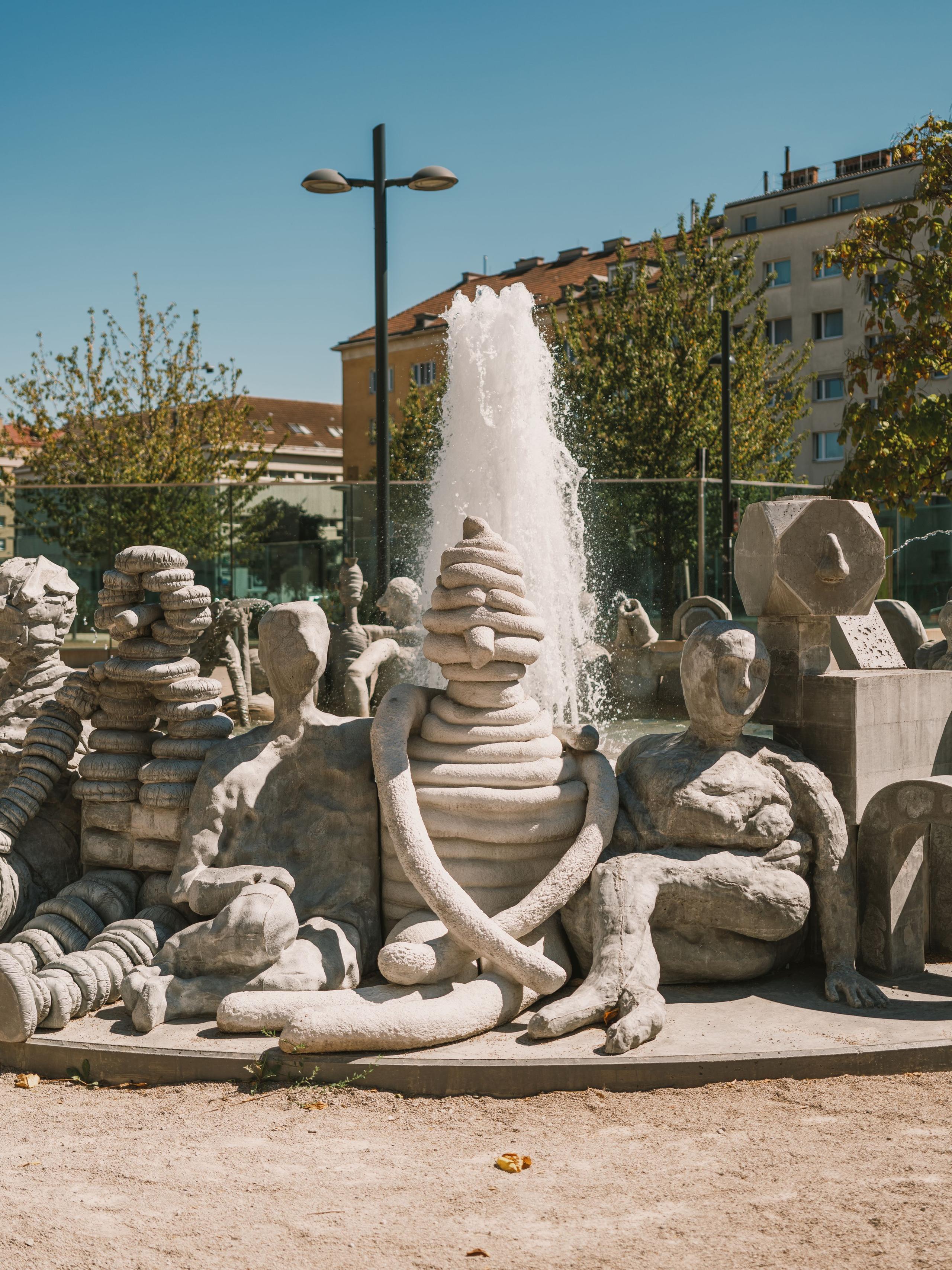
Vienna has a rich variety of historic fountains, as well as many examples of more contemporary designs. October 24, 2023, marked the 150th anniversary of the opening of the First Vienna Mountain Spring Pipeline, which brought crystal-clear water from the Alps to the imperial capital for the first time. To commemorate the occasion, the new WirWasser fountain was installed in the Sonnwendviertel urban development zone close to Vienna Central Train Station. Designed by art collective Gelitin, it features 33 figures clustered closely together to form a basin that – metaphorically speaking – holds Vienna’s precious water in place. As with many other art projects in Vienna, the fountain was created in cooperation with KÖR, an association that promotes art in the city’s public spaces.
10th district, Helmut-Zilk-Park, corner of Gudrunstrasse/Sonnwendgasse
Text: Maria Schaller