House of the Sea
A visit to the House of the Sea is an experience for everyone: for animal lovers, as a sightseeing highlight with breathtaking views over Vienna, as an exciting activity for families, as a restaurant visit above the rooftops or as the perfect plan for rainy weather.
Eye to eye with sharks and rays
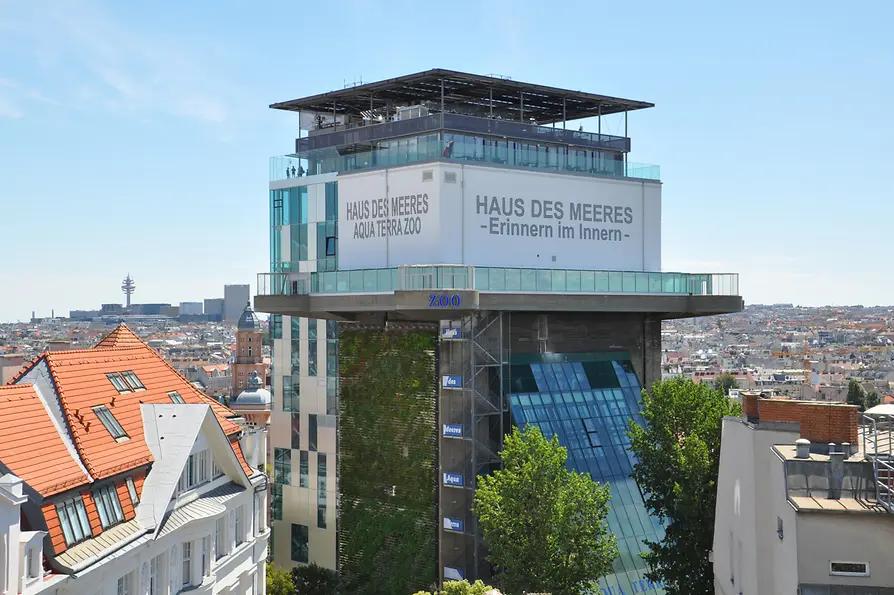
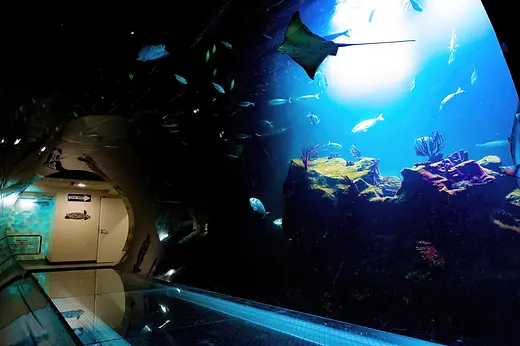
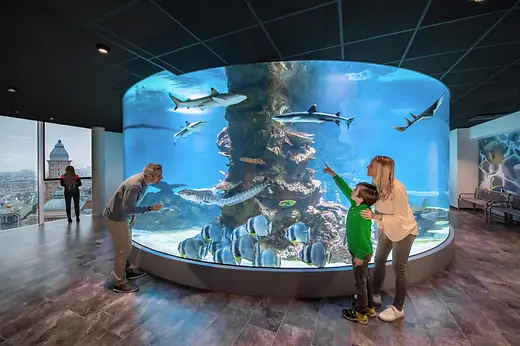
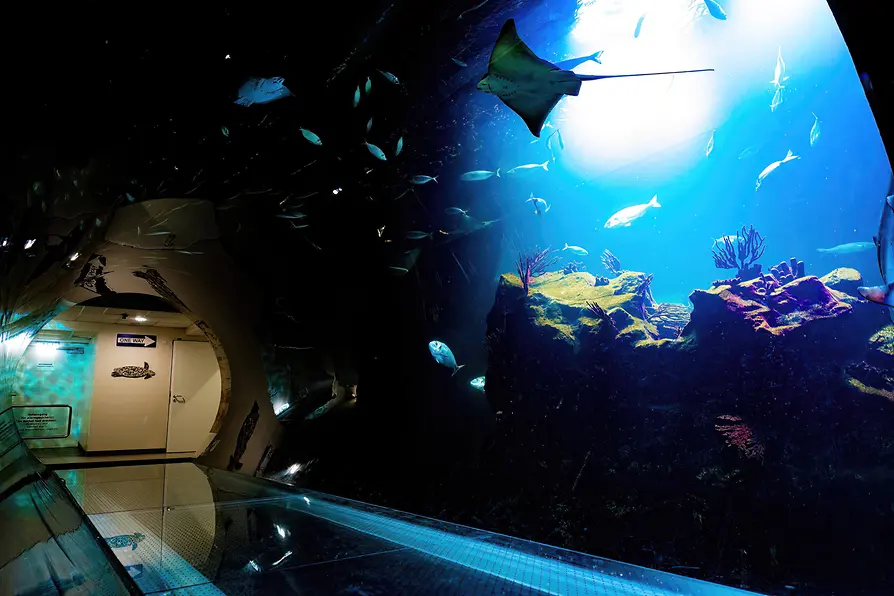
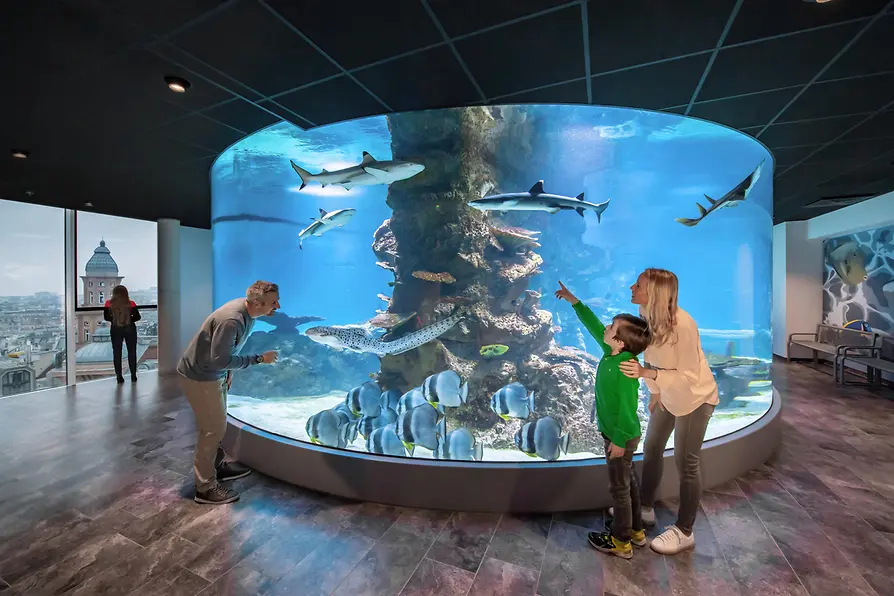
On the ground floor of the House of the Sea, visitors can walk through the ten-meter-long Atlantic Tunnel. The tunnel runs through a 500,000-liter tank that is home to Atlantic marine life, ranging from reef groupers to eagle rays and even a nurse shark. More than 1,000 fish, including reef sharks, rays, surgeonfish, damselfish, cleaner wrasse and many more, swim in the 360° Shark Tank on the 7th floor. Visitors can walk all the way around Austria’s largest tank, which measures 120 square meters and is a “glass-only aquarium.” It offers views just like those experienced during a dive. The 150,000-litre tank for hammerhead sharks on the 10th floor of the former flak tower is another highlight at the House of the Sea.
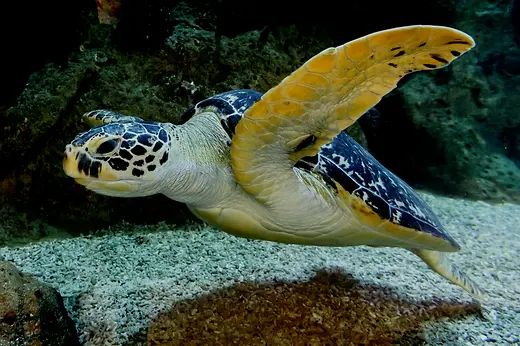
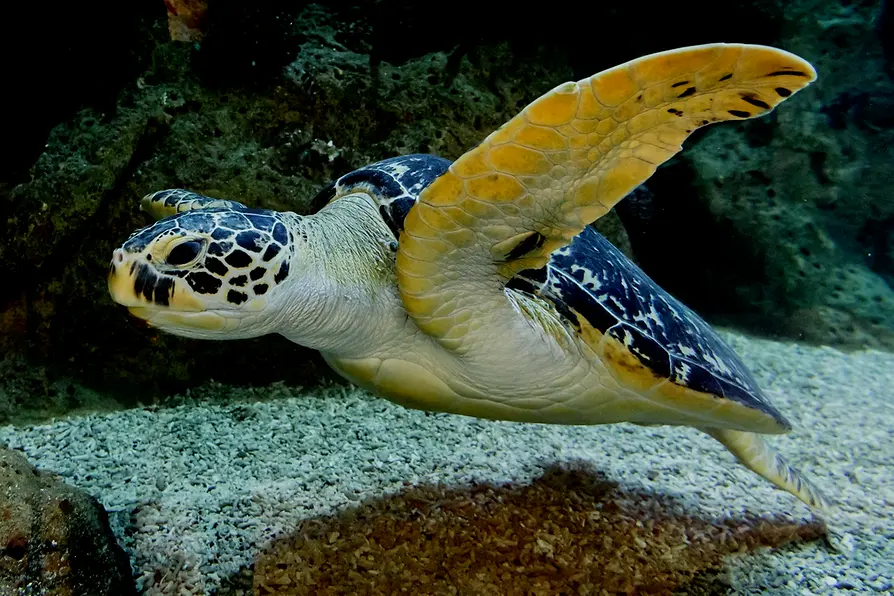
The star of the marine zoo is the green sea turtle Puppi. She is now more than 50 years old and has been swimming through the House of the Sea since 1982. She was never actually expected to live this long: in 1976, a Viennese couple rescued the 10-centimeter-long baby animal – hard to believe – from being eaten during a diving vacation in the Maldives and brought it back with them to Vienna. The “Surf Reef” interactive aquarium allows children to experience the world of tropical fish up close through “diving helmets” built into the aquarium floor.


Once around the world
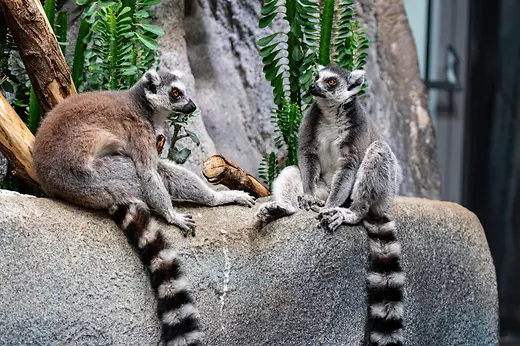
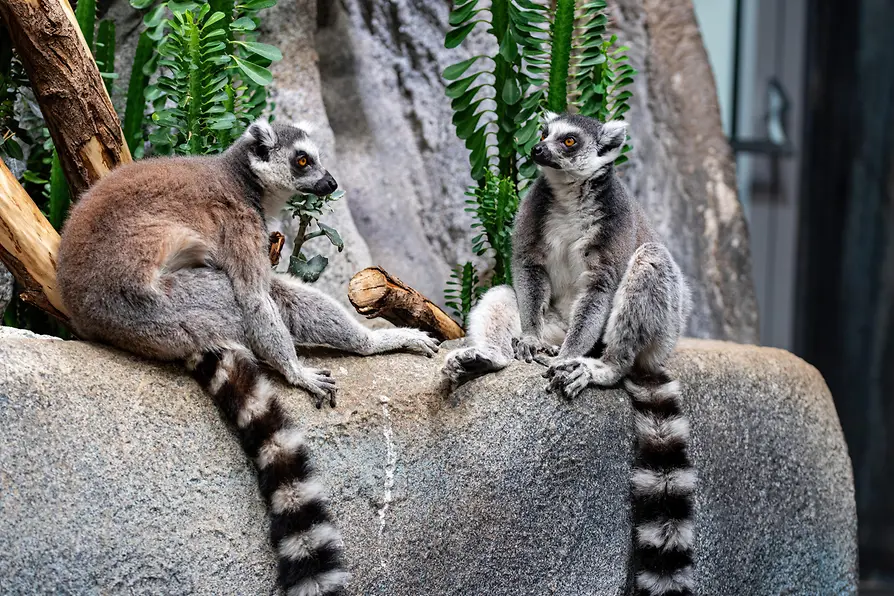
Four fluffy ring-tailed lemurs and two cheeky black lemurs share the Madagascar Enclosure, which has both an indoor and an outdoor area. With a reservation, visitors can even meet the adorable little creatures up close and personal. Things are considerably more low-key on the opposite side: there, an impressive Komodo dragon shares its enclosure with several bird species.
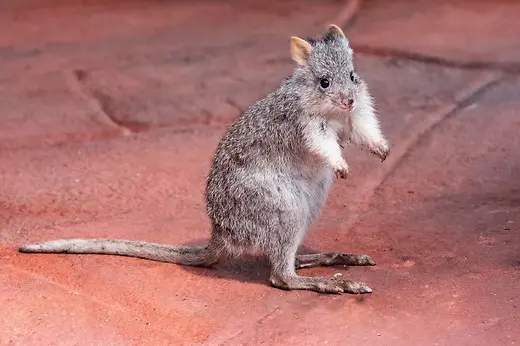
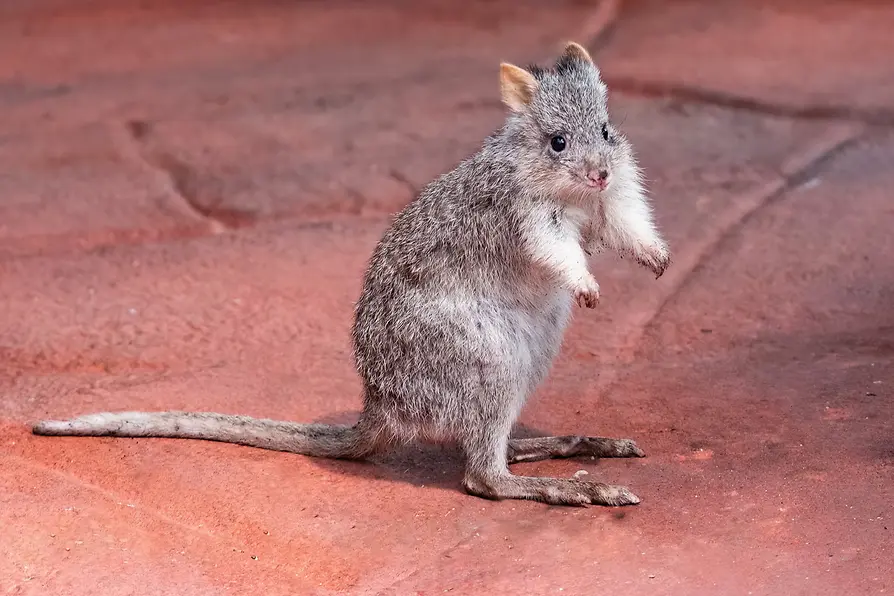
The Australia Experience World on the 9th floor is a colourful 70-metre circuit, full of parakeets and free-roaming marsupials, including a pair of woylies: at 30 centimetres in body length, they are among the smallest kangaroo species of all.
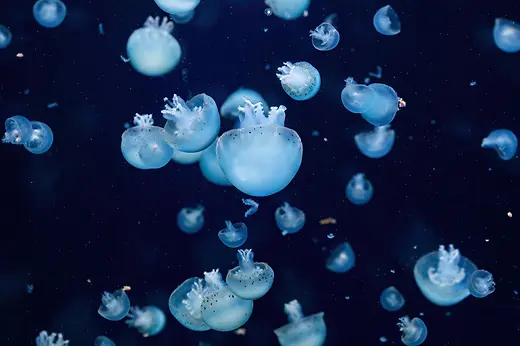
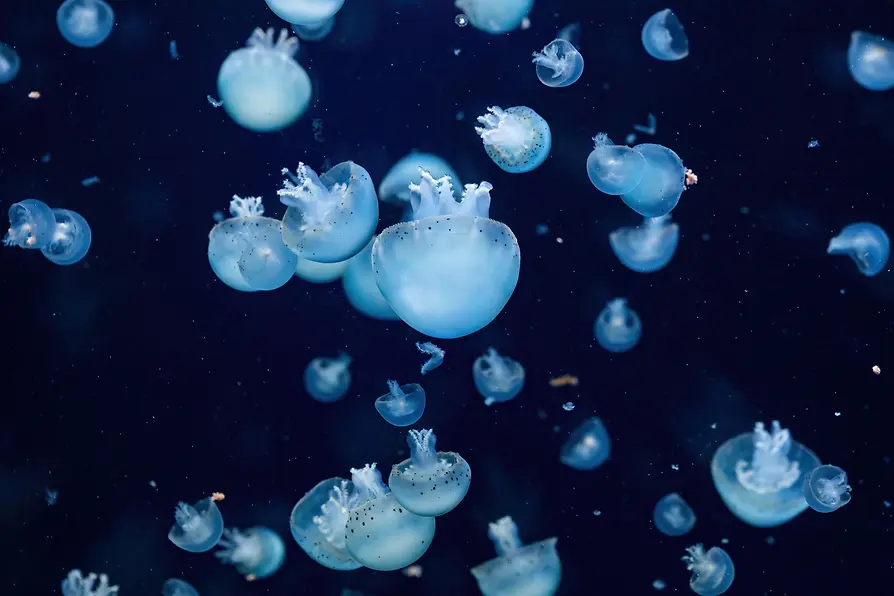
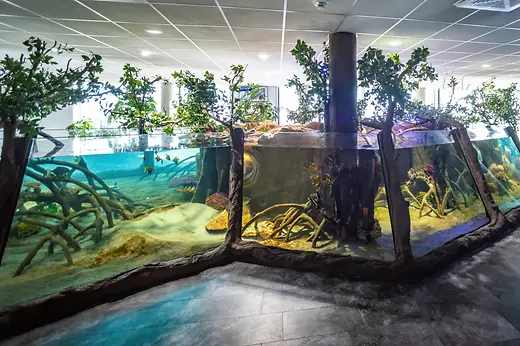
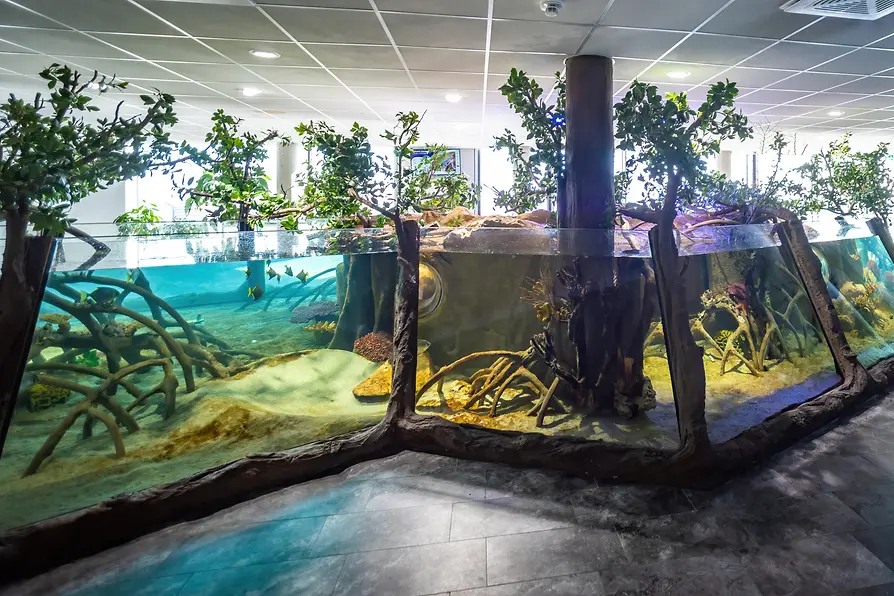
On the top floor, the fascinating world of mangroves awaits, with mudskippers, young reef inhabitants, fiddler crabs and mangrove jellyfish. A tidal organ illustrates the ebb and flow of the tides, while portholes in the tunnel offer views into the large tank.


More than “just” fish
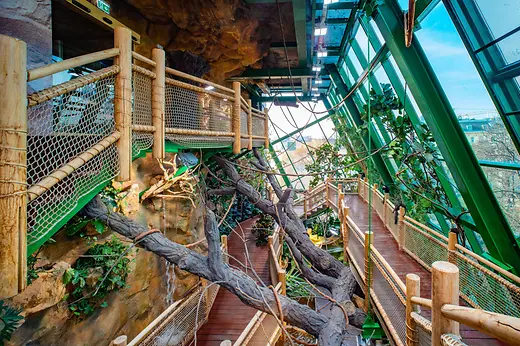
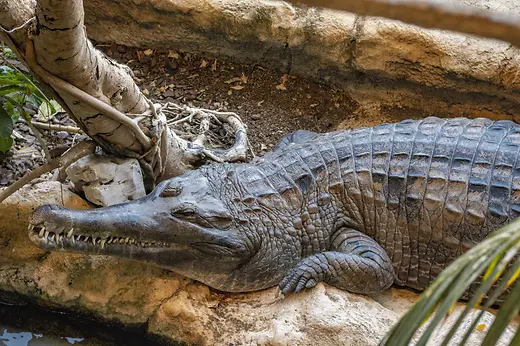
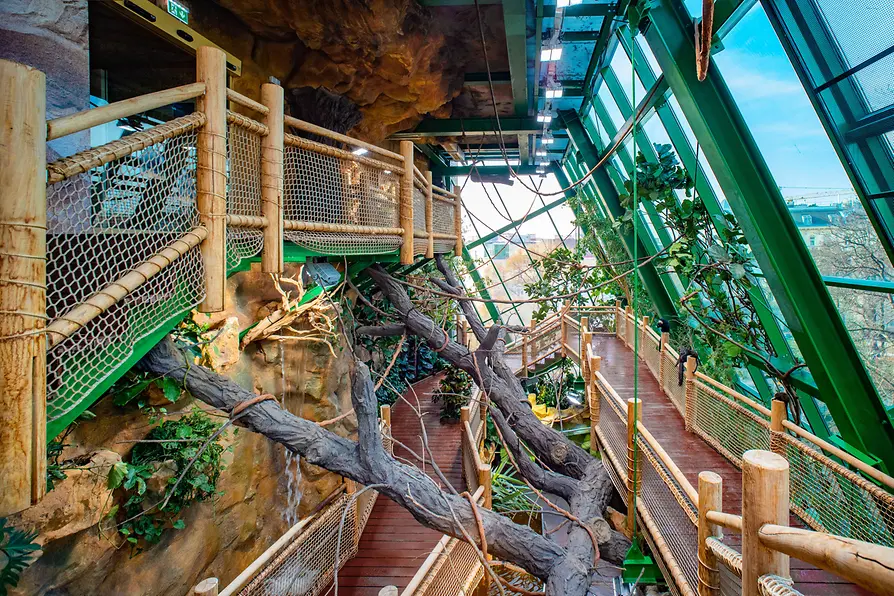
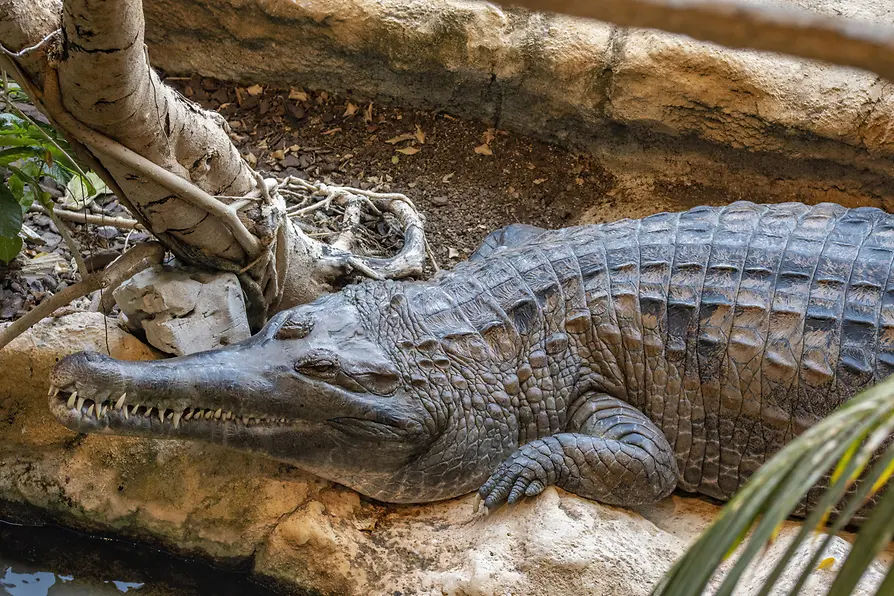
A spectacular glass extension 20 metres above the ground houses both the Tropical House and the Crocodile Park, where birds fly freely and lots of little monkeys roam as they please. In the terrarium section, poisonous and giant snakes, lizards, leafcutter ants, and tarantulas can be marveled at.
In an artificial stalactite cave grotto, you can observe over 100 animals and cave-dwellers which are active by night: poisonous giant millipedes, amplypigids and armored ground crickets, cave fish without eyes and scorpions that glow like ghosts under UV light.




Research and species conservation
The House of the Sea combines research with practical measures to protect endangered species and their habitats. In Mexico, it supported the reintroduction of the Tequila splitfin and is committed to preserving its habitat; expeditions to Madagascar provided new insights into biodiversity and the threats it faces. The House of the Sea is committed to the conservation of the Bavarian short-eared mouse, among other species, through coordinated conservation breeding programs, and supports the protection of the endangered Danube sturgeon. Research ranges from studies of corals and marmosets to the captive breeding of little-researched species, and also includes animals that otherwise receive little attention.
Feeding programs and guided tours
Various changing programs make a visit here especially exciting, such as:
- "Grasping" nature – "grasping" in the true sense of the word: Who wants to touch a shark's tooth or find out how its skin feels without any danger? Or look deep inside the mouth of one of the piranhas?
- Shark diving: Sometimes the green sea turtle called “Puppi” steals the show from the sharks.
- Feeding sessions for sharks, piranhas, reptiles, lemurs, monkeys, snakes...
- “Micro Sea” microscope show (baby jellyfish, starfish eyes, venom-filled worm bristles, one-eyed cyclops crustaceans...)
- The exhibition "Remembering inside" is concerned with the dark history of the anti-aircraft tower. It includes original exhibits and boards on the building’s history, and is displayed in the stairwell between the 9th and 10th Floors, which has largely been kept in its original state.



Dining with views over Vienna
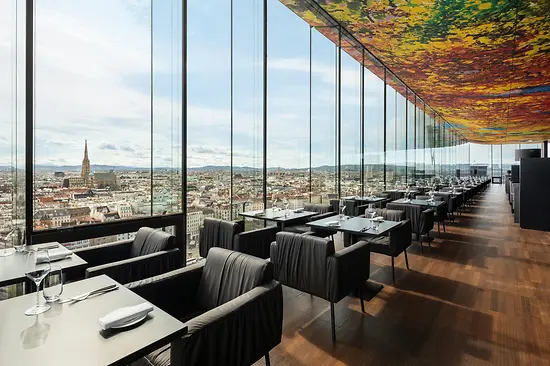
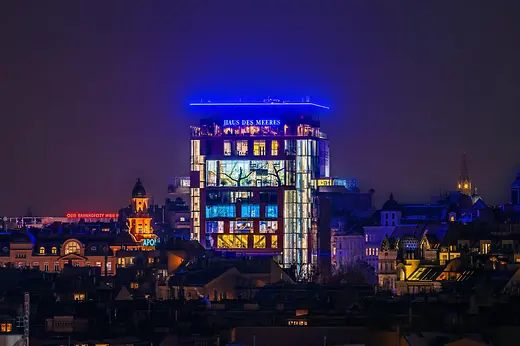
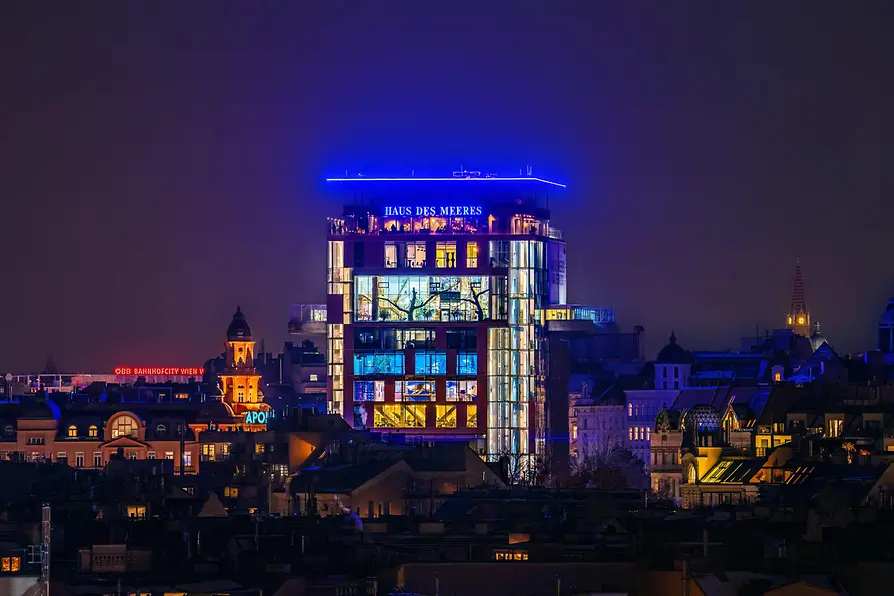
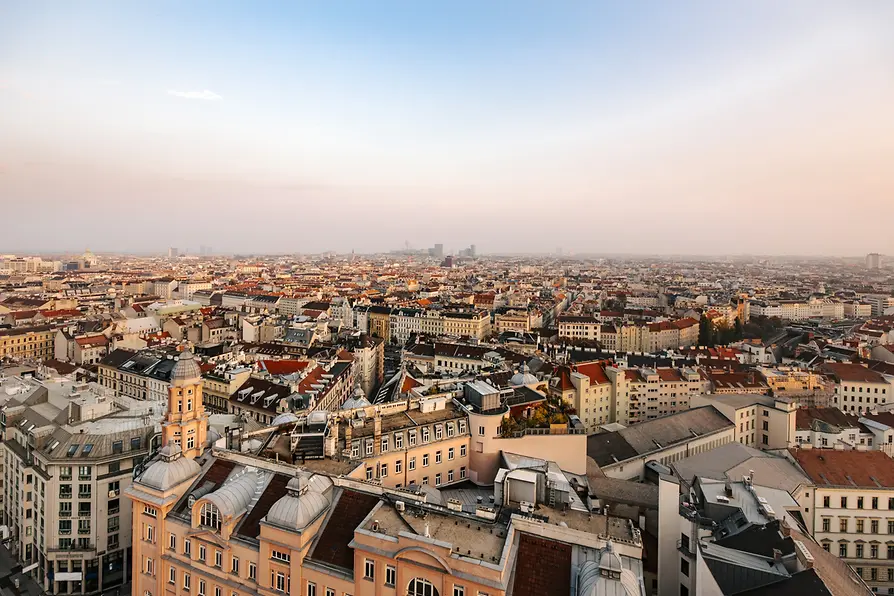
Something special also awaits you on the roof: there's a breathtaking all-round view of Vienna from the 360° Ocean Sky Restaurant & Bar on the 11th floor. It is the highest of all the rooftop locations in the center of Vienna! (Access during peak hours only with reservation). Zoo visitors can also enjoy the view over Vienna without eating in the restaurant.
- Fritz-Grünbaum-Platz 1 (Esterházypark), 1060 Wien
- www.haus-des-meeres.at
- office@haus-des-meeres.at
Opening times
- Mo, 09:00 - 20:00
- Tu, 09:00 - 20:00
- We, 09:00 - 20:00
- Th, 09:00 - 20:00
- Fr, 09:00 - 20:00
- Sa, 09:00 - 20:00
- Su, 09:00 - 20:00
Accessibility
no steps (Automatic sliding doors 150 cm wide)
Assistance dogs allowed
Wheelchair spaces: 6
Accessible toilet
Reduced admission on presentation of a disabled pass; one accompanying person for wheelchair users has free admission; Assistance dogs (with ID, vaccination certificate and identification blanket/leader dog harness) may be taken along for one visit.
All exhibition rooms and terraces accessible by elevator. For safety reasons, a maximum of 6 wheelchair users (max. 3 in the Ocean Sky Restaurant) are permitted in the Haus des Meeres at one time; advance booking is recommended.