The Chinese Sissi
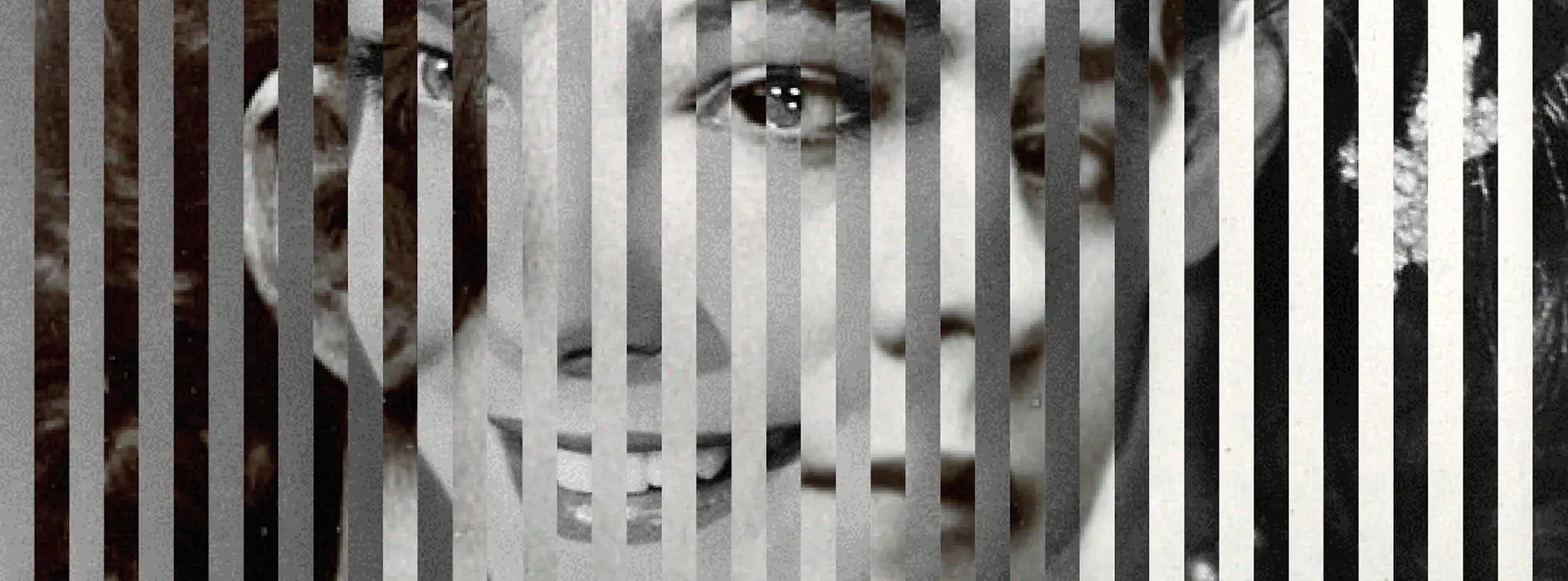
China is mad about Empress Elisabeth. But it’s not the historical figure of Elisabeth – known as Sisi – that is the primary object of China’s affections. The figure that China loves is in fact a construct that, while based on the real woman, has long since taken on a life of its own. This ‘Sisi’ is both Austrian and Chinese. She is European but with a local spin, nostalgic yet modern. Not so much a simple Western import, but the product of a cultural reinvention. Or put another way: China didn’t just adopt Sisi – it imbued her with a strong dose of its own unique character on top. Today, Sisi – or Princess Xixi, as she is called in China – is omnipresent. In her present-day guise, the lines have blurred between the real, historical Sisi and the Sissi of the 1950s Austrian film trilogy. This composite figure has become China’s prototypical European princess: a role model and a canvas for projecting all kinds of dreams and desires onto.
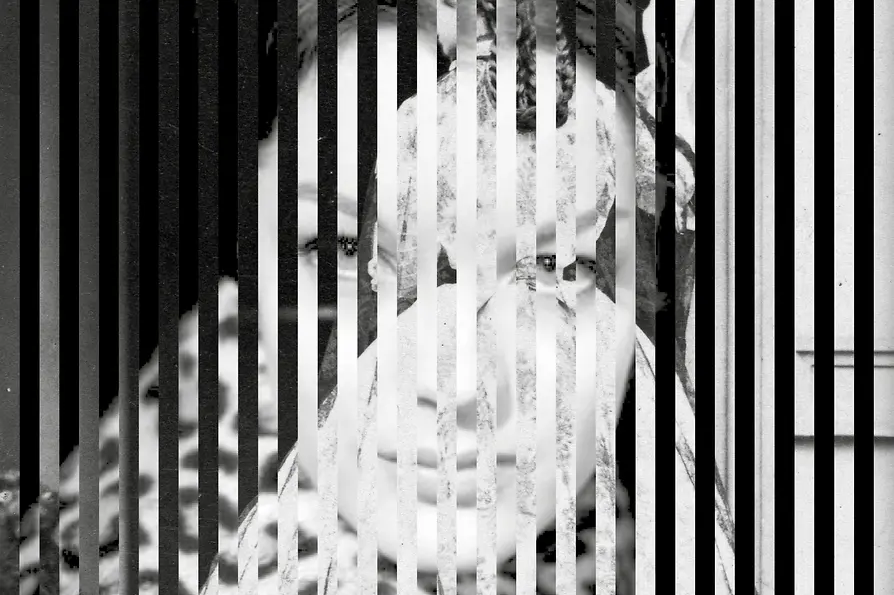
Now a pop icon, Xixi owns her image of a gentle rebel in a ball gown. Which makes her, in a happy coincidence, the perfect advertising figure. From real‑estate projects, skincare and bed linen to online games – and even lingerie, perfumes, handbags, breast‑augmentation procedures and sex dolls – Xixi shifts product. But it goes further than that: the first name Xixi has also become popular in China. The roots of this fascinating development and special cultural transfer can be found somewhere in the mid‑1980s.
A Time of Profound Change
“The Austrian Sissi trilogy starring Romy Schneider was among the very first non‑communist Western films to be dubbed for Chinese television back in the 1980s,” says Ke‑Chin Hsia. Born in Taiwan, he is a researcher and associate professor of modern history at Indiana University Bloomington. Working alongside fellow historian Fei‑Hsien Wang, he has explored the phenomenon of China’s Sisi at an academic level. “When the Sissi trilogy was shown on the Chinese mainland in the mid‑1980s, the country was going through a phase of profound change. After years of the Cultural Revolution and decades of strictly controlled cultural output, China was slowly starting to open up,” Hsia reveals.
A Shock — in the Best Possible Sense
As part of this opening up, American and Western European films began to reappear in China. They landed in a cultural vacuum: after the founding of the People’s Republic in 1949, “reactionary” and “bourgeois” Hollywood productions were replaced by films from the USSR, Eastern Europe, Algeria and other “socialist brother nations”. By the 1980s, that era had come to an end. “For an audience long cut off from the rest of the world, these films meant far more than mere entertainment. They were windows to the outside, glimpses of another life, a look into a world previously known only through hearsay.” The trilogy offered exactly the right mix of romance and glamor as well as a sense of freedom, Hsia adds. “Though Western, Sissi was not politically sensitive. Her story felt exotic, yet somehow familiar. She could be interpreted with such flexibility that an Austrian empress could become an almost homegrown figure in China.”
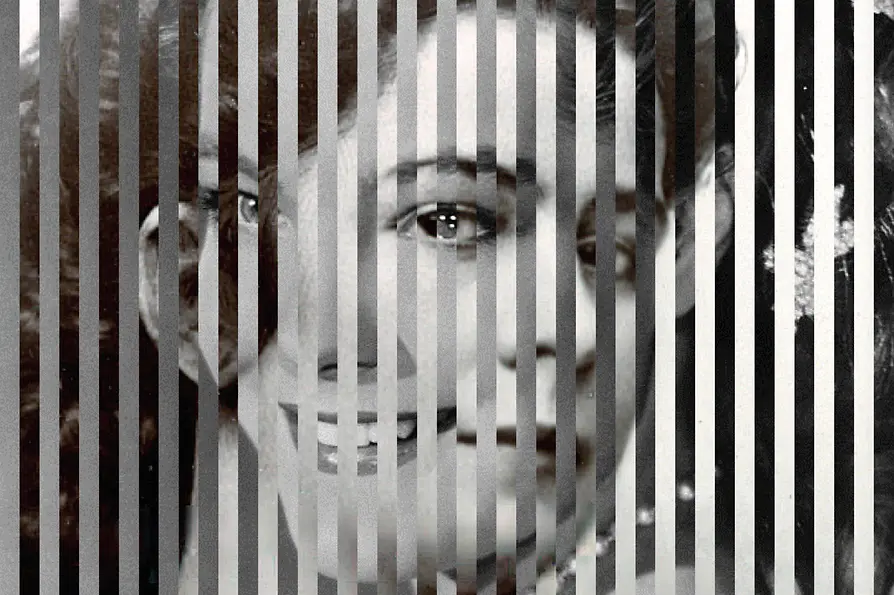
To many viewers, what the films showed came as a shock – in the best possible sense, as the historian explains. “Love at first sight. Palaces and mountains. Velvet, silk, uniforms and carriages. A young woman who is beautiful but not just a pretty face; who displays emotion but also knows how to stand her ground; who suffers but stays true to her own strong will.” For a Chinese audience that had spent decades watching mostly revolutionary narratives, political instruction pieces or strictly ideological characters on the screen, this was a radical shift in perspective. “Sissi brought color, feeling and glamor to the screen – and unapologetically so,” Hsia says. “The films landed in China at exactly the right moment.”
No Colonial Shadow
There was another altogether different reason why the figure of Empress Elisabeth resonated so widely in China. Hsia: “She came from a European monarchy that seemed exotic but came with almost zero political baggage. Unlike Britain, Japan, France or Germany, there are no associations in the Chinese memory with imperialism, war or colonial threat when it comes to Austria-Hungary.” And it was precisely this distance that made the Habsburg world easy to embrace: Sissi’s majesty could be admired against a fairytale Old‑Europe backdrop without triggering ideological tensions. Much of the historical weight carried by other European figures simply didn’t apply to her.
800 Million Viewers
It was this broader context that enabled Ernst Marischka’s three Sissi films to become such a hit. In the 1980s, the dubbed Chinese versions of the trilogy reached around 800 million viewers. Sissi had come to China to stay. China Central Television (CCTV) has broadcast the trilogy every year during the Chinese New Year holidays since the late 1980s. “Some fans say that sitting down to watch Sissi together after CCTV’s annual New Year’s Eve gala has become a cherished family tradition,” Hsia notes, revealing just how deeply the trilogy is anchored in China’s media culture. And Sissi wasn’t the only one to shoot to stardom on the back of the films. “Ding Jianhua, the voice actress who dubbed Sissi in Chinese, became a celebrity thanks to her memorable performance – and was later even elected to the Shanghai People’s Congress. In 1998, Romy Schneider was named one of the ‘famous personalities China’s youth should know’ in light of her portrayal of Sissi,” Hsia confirms.
On Baidu Tieba – one of China’s largest online discussion platforms – Sissi/Xixi fans gather in the “Princess Xixi” forum to discuss every last detail of the films. “They share trivia about Romy Schneider’s cinematic Sissi and all things Empress Elisabeth-related,” Hsia says. Fans have compiled lists of every dress Schneider wears in the trilogy and collected Chinese translations of Elisabeth’s poems. Unsurprisingly, they endlessly debate just who Sissi’s true love really was. Thanks to her popularity, Sissi/Xixi even inspired a mini trend of naming girls after her.
Pronunciation Conundrum
“Though there aren’t any accurate, publicly accessible long‑term statistics, you can cross reference a database of academic theses from Chinese universities to get a rough gauge of the trend of naming daughters Xixi among people with higher levels of education.” From around 2010 onwards, there is a steady – and rapid – increase in the number of theses written by women named Xixi. “So we’re looking at exactly the people who were born around the time the Sissi trilogy was first broadcast,” Hsia notes. But the twists and turns don’t end there: the popularity of Sissi/Xixi even changed the Chinese language – specifically the pronunciation of the character 茜. “Originally, this character was pronounced ‘qian’ in Mandarin and referred either to madder – a flowering plant used to produce red dye – or to the color scarlet. In the wake of the successful trilogy, ‘xi’ – once a rare alternative reading used mainly for transcribing foreign women’s names – emerged as the dominant pronunciation in the PRC, because many girls wrote their name with this character and pronounced it ‘xixi’ – exactly as their parents pronounced the name of their beloved Sissi, Princess Xixi,” the historian observes. In recent years, this phonetic shift has repeatedly sparked debate regarding the ‘correct’ pronunciation of the character, both online and in the mass media. “During the 2016 Olympic Games, the Chinese press was so divided over how to pronounce the name of a young diver whose first name included the character that she was obliged to come out and clarify it publicly,” Hsia recalls. Please call me Ren Xi, she told journalists in Rio de Janeiro – proudly adding that she had indeed been named after the famous Princess Xixi. After she won gold in platform diving, a major Chinese news outlet ran the headline: “The age of Princess Xixi has arrived!”
Icon of Consumerism
The true Age of Princess Xixi, however, dawned in China’s consumer world. Leading online shopping platforms such as Taobao.com and JD.com offer a dizzying array of services and consumer goods named after – or inspired by – Princess Xixi. They run the gamut from the usual suspects such as toys, hair accessories, handbags, women’s clothing and personal‑care products to far more unexpected ones: sanitary pads, Halloween costumes, online role‑playing games, electric scooters and even silicone dolls. “In China, Xixi represents a market force that the real Empress Elisabeth would probably struggle to comprehend. But for Chinese entrepreneurs and consumers alike, Princess Xixi goes hand in glove with romantic love. The love story between Sissi and Franz Joseph and their magnificent imperial wedding, as seen in the first Sissi film, has always been a central theme in popular Chinese narratives about Sissi – or Xixi,” Hsia explains. So it comes as little surprise to discover that a number of wedding‑photography studios were named after Princess Xixi in the 2010s. And for a while, Taobao even offered branded home‑decor packages for newlyweds under the exclusive Princess Xixi Home Decor label. In reality, many of these business ideas disappear from China’s dynamic consumer landscape as quickly as they appear. The same is true in fashion. Companies regularly try to get a commercial headstart by using Xixi as a shorthand for elegance, romance, nobility, European refinement and feminine style – sometimes striking upon marketing stories so far‑fetched that they bear no resemblance to historical reality. One fashion company targeting young professional women promoted its products with the claim that Princess Xixi helped Emperor Franz Joseph become ruler of “Europe’s strongest country in the 19th century” through her “striking variety of clothing and personal styling”. Precisely the kind of advertising schtick that has been replicated across all consumer sectors. Just how far the commercialization has gone really stands out in products that promise enhanced intimate aesthetics or sexual attractiveness: intimate-care creams, breast augmentation and other beauty‑related medical services are all marketed under the name Xixi or come with direct references to Sissi. “In this respect, Xixi has shifted from an embodiment of beauty to an object of open sexual desire and physical imitation,” Hsia says.
Schönbrunn in Beijing
But Xixi is also fueling the nation’s real‑estate sector: around 50 kilometers from Beijing, a themed residential development – complete with hotel – emerged in the mid‑2010s, inspired throughout by Sissi and the Habsburg monarchy. The complex, named “Dingxiu Meiquan Xiaozen”, contains a direct reference to Schönbrunn Palace – Meiquan being the standard Chinese translation of the Habsburgs’ Viennese summer residence. The brand promises “the imperial atmosphere of Austria‑Hungary”. A huge oil painting of Empress Elisabeth greets visitors in the lobby, and the Sissi restaurant – in keeping with this fascinating cultural cross-pollination – serves Western‑Chinese fusion cuisine.
Text: Johannes Luxner
About the authors of “Sissi, The Chinese Princess: A Timely and Versatile Post-Mao Icon”:
Ke‑Chin Hsia was born in Taipei, Taiwan. He studied in Taiwan and completed his postgrad degree in the United States, earning his PhD in Modern European History from the University of Chicago in 2013. In 2014, he joined the Department of History at Indiana University Bloomington, where he now teaches and conducts research in his capacity as Associate Professor of History. He visits Vienna almost every year – for research and for pleasure.
Fei‑Hsien Wang is also a native of Taiwan. After completing her PhD in Modern Asian History at the University of Chicago and a postdoctoral research fellowship at the University of Cambridge, she is now Associate Professor of History at Indiana University Bloomington.