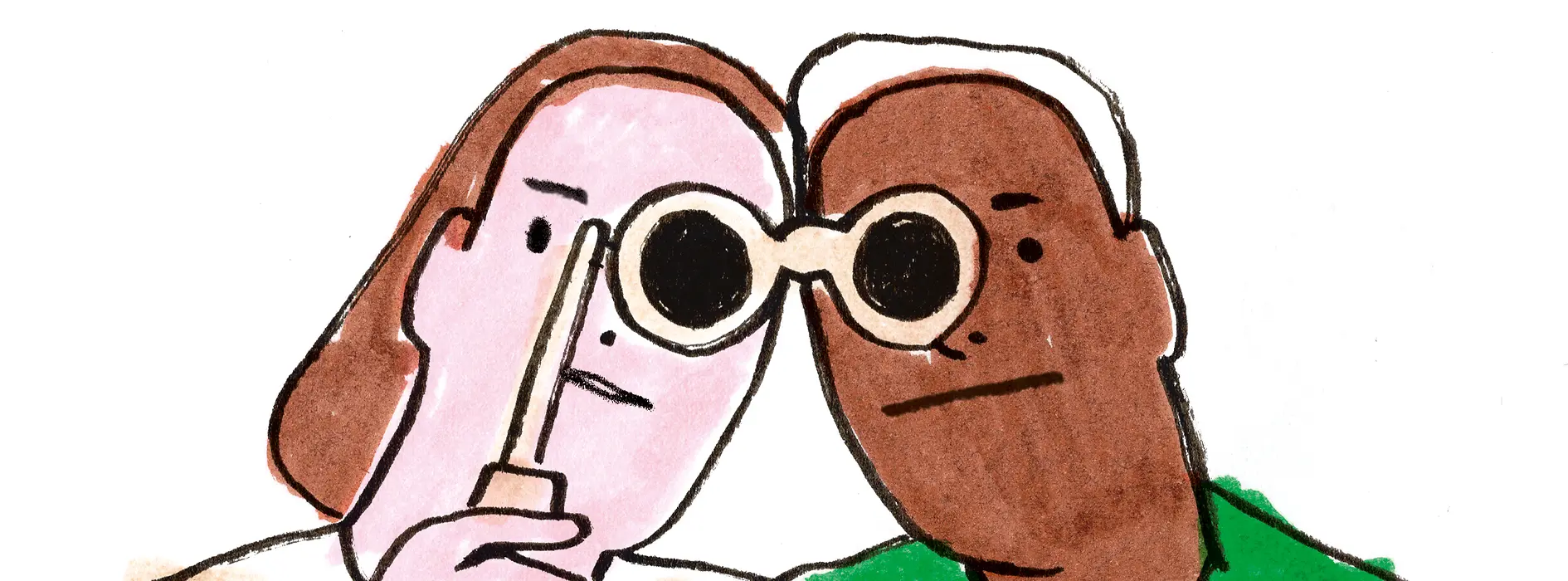
A Profile of the Viennese
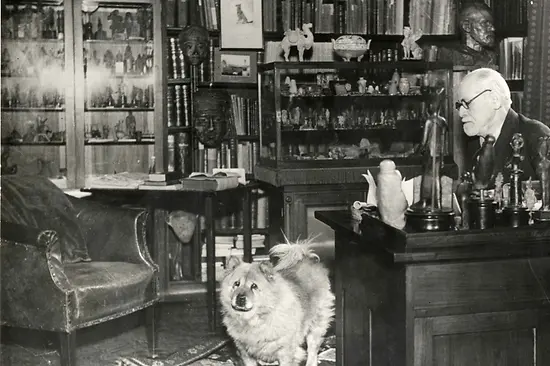
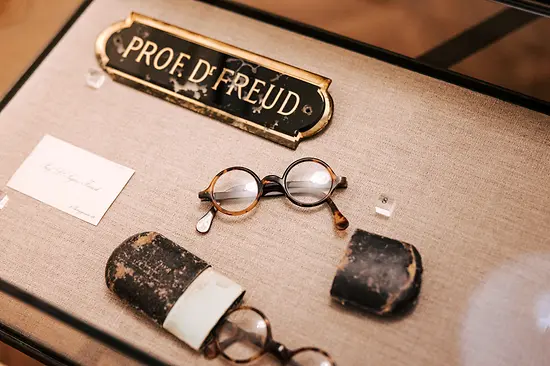
Depending on who one asks, Vienna is either a village or some kind of bustling megalopolis. Full of pride, one notes that Vienna keeps being named the world’s most livable city: it’s good for the ego. But at the same time, something else continues to exert an influence: the monarchy. As the manifestation of an all-powerful past, it weighs on the collective psyche in the city of Sigmund Freud, triggering certain ambivalences that gnaw away at Vienna’s inner peace like beavers on the trees on the Danube Island: there’s always something – and that shows up in very special states of mind.
As ‘Grant’ [grumpiness – ed.], as ‘Schmäh’ [a specifically Viennese type of humor] or in a bureaucratic mindset. It seems like the Viennese are caught somewhere between modernity and the intangible heritage of the past. They are warm, when one lets them be; modern, when they choose to be; as well as sullen and servile the moment officialdom rears its head. What follows is a brief primer on the peculiarities of the Viennese character.
Vital Titles
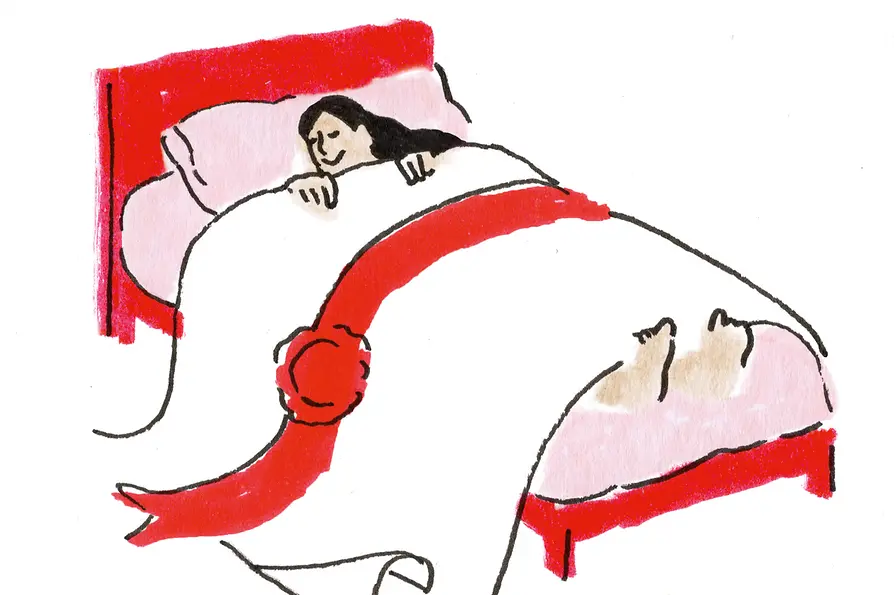
All self-respecting Viennese find the cultural obsession with titles laughable – until they get one of their own, that is. While the actual qualification behind some of these honorifics may be modest, it’s all about the kudos.
The Viennese just love a title, be it academic, official or honorary. They are relics of the monarchy: to keep the civil-service machine on side, titles were handed out like communion wafers at mass. Whoever was present was taken care of. And so it came to pass that those in favor wore their new appendage like a badge of honor, their given name often slipping into obscurity. A habit that persists to this day.
Titles are an expression of a sense of hierarchy – and a certain subtle disrespect. The wife of a director becomes ‘Frau Direktor’, even if she holds no such position – an official seal of marriage is the key to self‑empowerment.
But even legitimately earned titles were not always a sign of genuine expertise. Many civil‑service titles required no academic aptitude at all. It was enough to just avoid doing anything wrong – for as long as possible. Officials could rise through the ranks without moving, by sitting out the years and letting the title come to them. And even in the arts, staying power is rewarded.
Anyone appointed Kammersänger in Vienna may well enjoy a certain degree of adulation. Even if the title merely signifies that, after many years of performing, the bearer of the title never once sang a song against authority. A talent in its own right.
Viennese Grumpiness
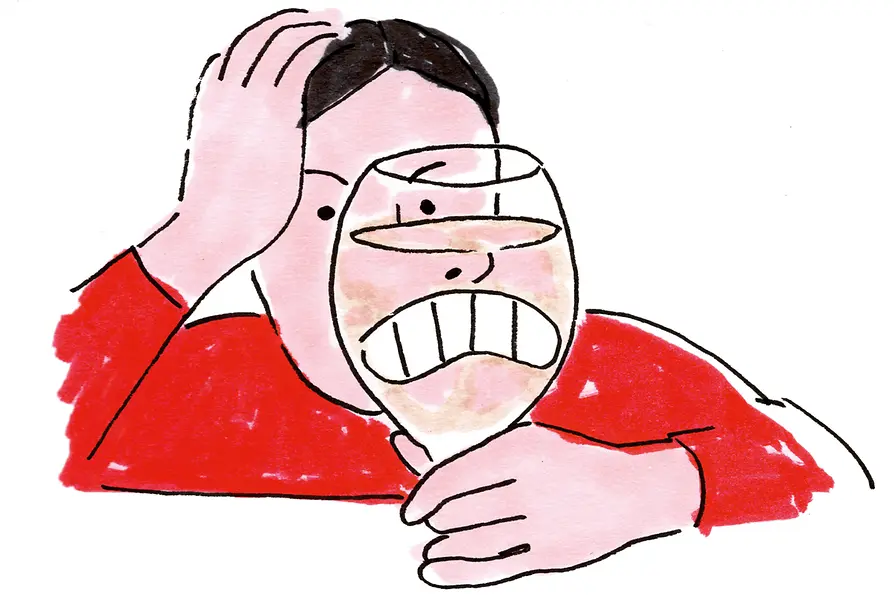
‘Grant’ [rhymes with Kant] is a very particular strain of Viennese grumpiness. It’s part of every resident's standard toolkit and requires no special trigger to activate. Somewhere, somehow, there will always be a fly in the ointment, or ‘hair in the soup’ as they say.
The Viennese are passionately grumpy. ‘Grant’ is an Austrian synonym for a day-to-day discontent that is hard to pin down. Having originally sprung from dissatisfaction with the monarchy, it is now readily channeled into things that cannot be changed: the weather, the passage of time, existence itself.
Forms range from charming grumbling, low level whingeing and bellyaching to heartfelt malice. It is a kind of grey‑toned pessimism that often says more about the complainer than the subject of complaint. One wants to find that hair in the soup, even though one knows that the cook is bald. Looking for it all the same marks the true dedication of every committed Grantler. An example? When Vienna was named the world’s most livable city yet again, one resident commented: “It’s probably even worse elsewhere.”
Consensus Orientation
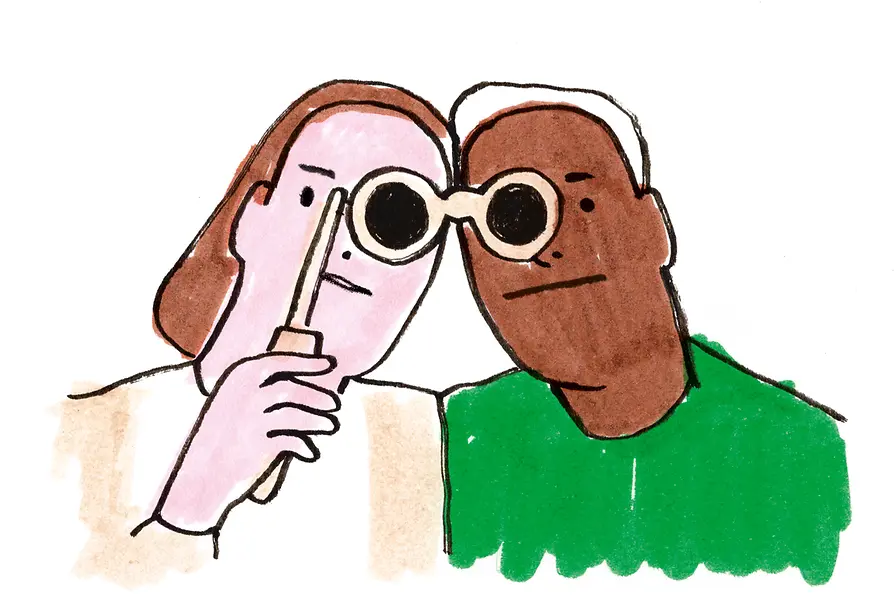
Just because the Viennese don’t always show it, it doesn’t mean that they’re incapable of compromise. Only consensus offers the kind of contentment where Viennese Gemütlichkeit or coziness can develop, just the way one likes it.
Some call it a craving for harmony, and dismiss compromise as a semi‑defeat. But in Austrian politics, a hard‑won consensus counts for as much as a goal in the Champions League. Even the Federal President describes compromise as the talent that has brought the country prosperity and respect. After two world wars and a civil war, it was a long, stony road to that particular insight.
Today’s consensus politics has its roots in the monarchy, when peaceful government of a multi‑ethnic empire was everything. History teaches us that consensus cannot always be achieved – but the quest to find it is never misguided.
In everyday Viennese life, this produces a diplomacy of interpersonal Gemütlichkeit and social tact, where one only commits to something once one has everyone – or the majority – on board. Reconciliation by any means seems to be the guiding principle.
The will to establish consensus is so strong that, in the federal system, one prefers blocking one another to provoking an éclat. As a political zero-sum game, while this give-and-take can often look operetta-like, it does convey stability. Even if it is only a longed-for feeling that is hard to pin down. But all of this means one lives quite well with that in a country which one believes has an unbeatable trump card: that certain something.
Bureaucratic Thinking
Bureaucracy regularly pushes the Viennese to the limits of their ability to tolerate frustration. At the same time they have long internalized the complex and complicated nature of an elaborate rulebook into their very being.
The Viennese have a complicated solution ready for every last small problem they encounter. As heirs to the monarchy they are used to the rulebook of a bloated bureaucracy – and that leaves them with ambivalent feelings. On the one hand there are petty obstacles and an official language that’s enough to drive anyone to despair. Yet beneath all those laws, bureaucracy also offers a set of rules and matching solutions for almost every conceivable issue.
One accepts this through gritted teeth and scarcely notices just how deeply bureaucratic thinking has entered one’s own bloodstream: a legalese-laden, love-hate relationship. One knows that going through the official channels is ultimately more often rewarded than punished, yet one still resists its drudgery with every fiber of one’s being. At the same time, the efficiency of modern government offices is astonishing. Or at least it is when one still remembers how things were in analog times. Then, one was content to be reduced to a case number for an official decision. And end up with a solution – and a little something to grumble about thrown in for free.
Polite Distance and Indirect Communication
Out of a long-standing and long-since-ridiculous fear of authority, the Viennese still like to adopt a somewhat equivocal tone. Before committing too quickly to anything, one prefers to keep one's distance and say a great deal of nothing instead.
The Viennese talk a lot and often, without really saying anything. Especially when it comes to questions that might force a decision on them – then they really like to say a great deal of nothing. As the descendants of a monarchy, today’s Viennese still fear authority – even if that fear is absurd. This inherent caution gave rise to a distinctly non-committal manner of speaking. A mixture of politeness and waffle whose soporific effect has seen off many an interlocutor. The Viennese would rather drown in empty phrases than commit too soon. On top of that, people need to understand the subtext of what’s being said, where an apparent agreement is often nothing more than an oblique refusal.
This affirmative shadow-boxing kicks every disagreement into the long grass, where the Viennese have long made themselves comfortable. A place where “Let’s wait and see, then we’ll see” counts as progress.
Nostalgic Self-Perception
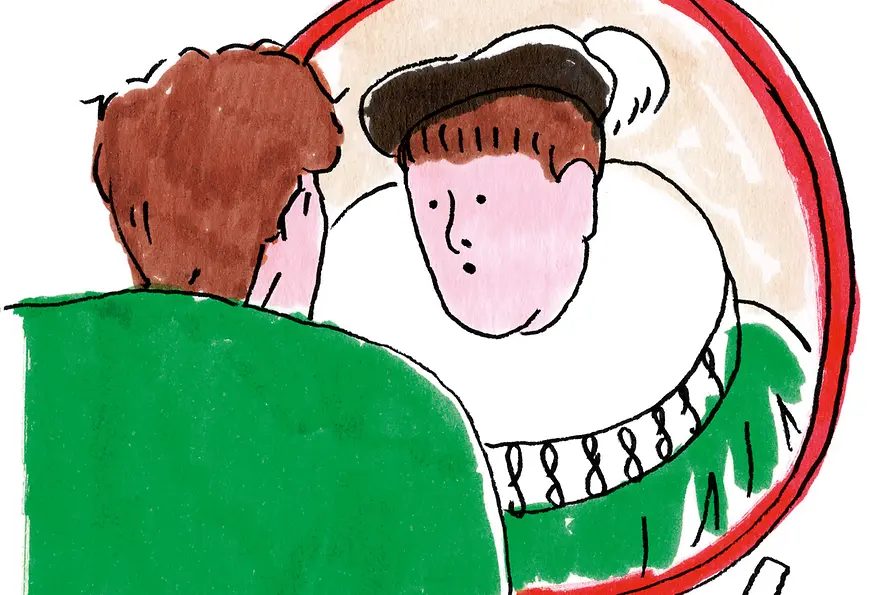
The Viennese feel a warm glow when they reflect on the importance of the fallen monarchy. It is the point of departure from a fundamental state that assumes things were better in the old days – even when no one knows exactly what ’things’ are meant.
In Vienna, one is generous, especial with oneself. The rituals of self-congratulation infused with a strong nostalgia that says: we may be great, but back then it was even better. But one refuses to be drawn on what exactly this ‘it’ is supposed to be. ‘It’ provides an excuse for sighing, staged sentimentality that comes across as sweet as a Viennese fondant fancy. Yes, nostalgia really is the sweetener in Vienna’s mix. It feeds on the nation’s history, perceived as glorious – on the old belief that size equaled significance, and on the phantom pains caused by its later diminution. Full of wistfulness, people long for the good old days – days that conveniently blot out everything that was dishonorable or terrible about them. There is simply no room for that in the nostalgic self-image. Only the positive memories remain – anything that's worthy of a postcard. The traditions of music, the grand buildings on the Ringstrasse, the ball culture, the horse-drawn carriages in the first district. While one would rather die than be seen in one of those tourist carriages, one is glad and proud to know that they are there – just as long as one does not step in any of the horses’ deposits while strolling around the old town.
Viennese Humor and Irony
In other places one has a sense of humor, Vienna has ‘Schmäh’. A special blend of dry wit and ice-cold insults. Courtly etiquette collides with the rough-and-ready tone of the world outside the old city walls, serving up sugar-coated put-downs.
Viennese Schmäh is world famous – in Vienna, at least. Schmäh is a very specific approach to humor, living somewhere in the neighborhood occupied by the term ‘Schmähung’ – the act of slighting someone. It often sets the tone for this kind of humor. Viennese Schmäh is judgy and ironic, cheek drenched in sugar, a life-affirming fatal blow.
Once again, it can be traced back to the monarchy, when double meanings carried criticism of authority. It walks a thin line between exaggerated politeness and insults served ice cold. Courtly etiquette collides with the rough tone of a world beyond the old city walls. Anyone can find themselves on the receiving end of Schmäh once it gets going, creating a milieu in which a malicious kind of democracy reigns. One that never holds its tongue. Any anyone who can’t take it, doesn’t have it – and there’s nothing sadder than humorlessness. Not just in Vienna.
A Fondness For Superlatives
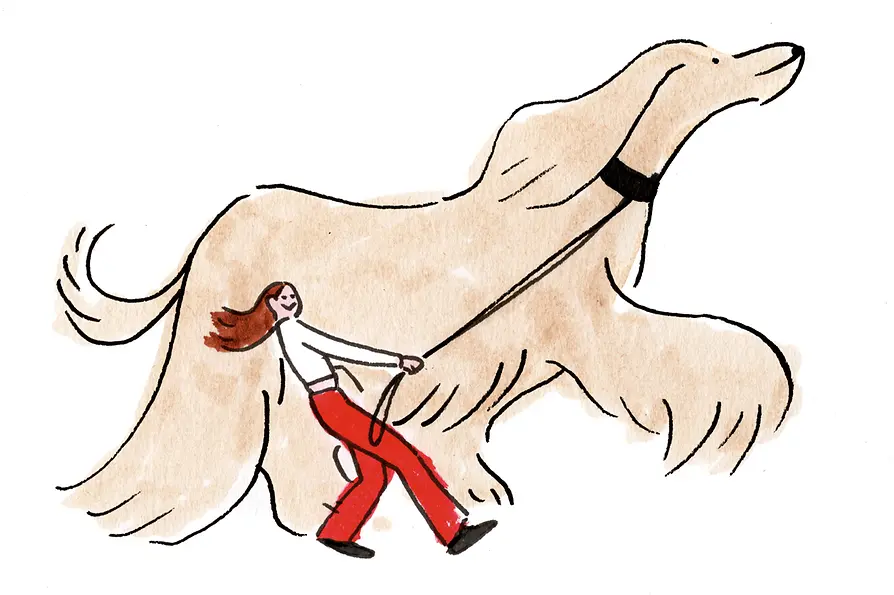
The Viennese have a fondness for superlatives, even though those same superlatives tend to undermine credibility. So they invented one of their own. Using the short syllable ‘ur’, it expresses something that really is a cut above.
People are walking contradictions: it's one of the things that the Viennese and the rest of the world have in common. Goethe’s ‘exulting to the heavens and plunged in despair’ would be accepted at any time as a diagnosis of the Viennese soul – even by Sigmund Freud. When it comes to reaching a state of euphoria, they prefer to get there on their own. That’s when they tend to reach for superlatives, while accepting that the credibility of any claim can be brought down under the weight of those same superlatives. Only in Vienna can one glass of wine be emptier than another. And then the Viennese have another secret weapon: a short syllable that quickly loses its meaning outside the city, but works like a trump card inside it. It’s the syllable ‘ur’ [similar in use to the British ‘well’].
Put it in front of an adjective and one has created the ultimate superlative – for good or for not‑so‑good: ursuper [well good], uraufregend [well exciting], uroarsh [well sh*t}. Even the most overused description is suddenly elevated to special status. It’s a handy bit of laid-back Viennese shorthand: highlighting the exceptional with the least possible effort. After all, a familiar saying goes, ‘no waves’ – meaning no fuss – the Viennese version of coolness. This coolness reaches its peak in ‘urleiwand’, an untranslatable superlative for anything and everything Viennese people like.
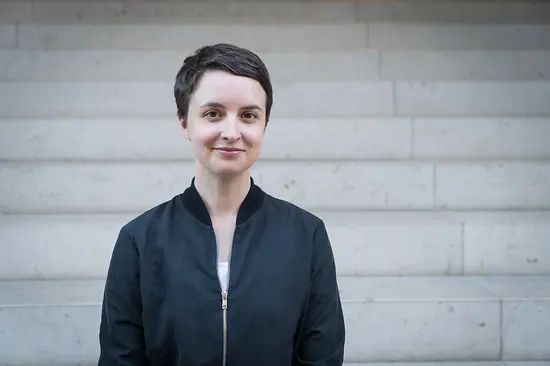
Text: Karl Fluch
Karl Fluch is a freelance writer. He spent more than thirty years as culture editor at Austrian broadsheet Der Standard. He also wrote gags for the ORF show ‘Willkommen Österreich’ for twelve years; he now does the same for the late‑night show ‘Gute Nacht Österreich’.