Public restrooms in Vienna
The City of Vienna alone operates over 160 public restrooms. The vast majority are free to use. At high-footfall locations, service and cleaning staff are on site during operating hours. Two coin-operated facilities are cleaned automatically after use. All City of Vienna restroom facilities are shown on the map in the free ivie app.
Modern facilities
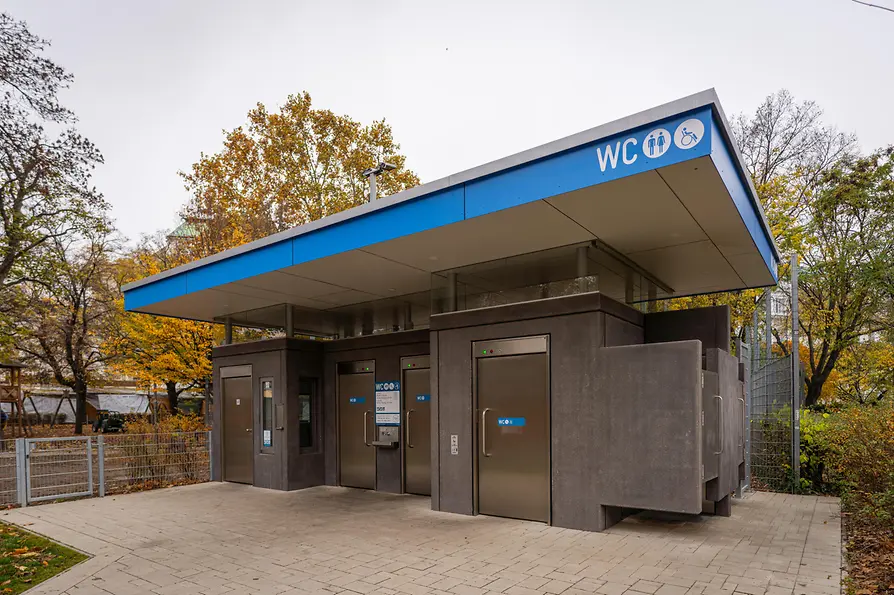
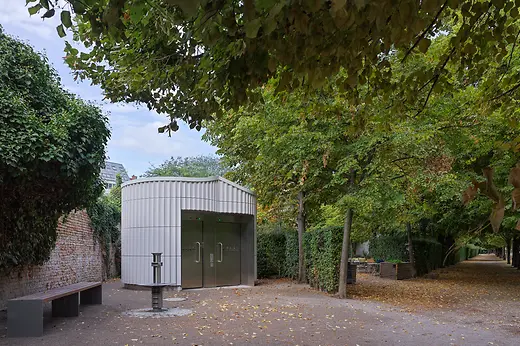
Vienna invests heavily in modernization, the maintenance of historic facilities and the construction of new ones at both existing and new locations. Modern restrooms in Vienna are built using a modular system, with precast concrete elements featuring anti-graffiti coating, a stainless steel structure, in some cases exterior washbasins, accessible modules and, where possible, green facades. All these elements were used in the facility that opened in July 2025 at Resselpark.
Additional publicly accessible facilities can be found at Wiener Linien and Austrian Federal Railways stations, in numerous museums, at public universities, in cemeteries and in parks such as Schönbrunn Palace Park, the Prater or on Danube Island.
Unusual restrooms
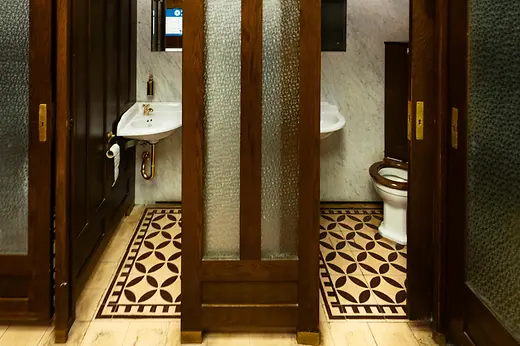
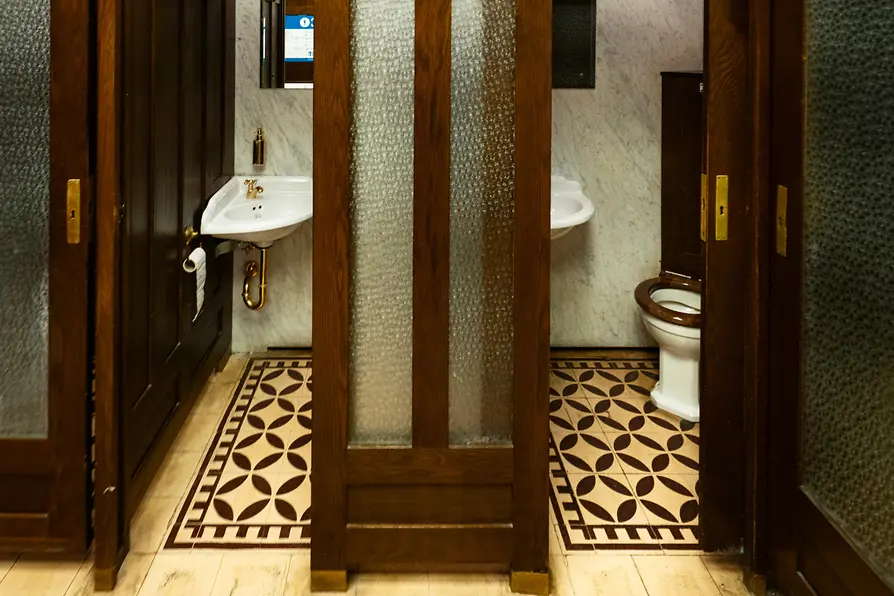
Some facilities have become attractions in their own right. The underground public convenience on the Graben opened in 1905 and is protected as a historic monument because of its Art Nouveau design. It was originally supposed to be built at Stephansplatz, but objections from church authorities led to the site being relocated about 300 meters away. High-quality materials were used, including oak or teak wood, brass fittings and cut glass panes. Despite modernization, the historic character has been preserved. Individual sinks are installed inside the stalls, just as they were back then.
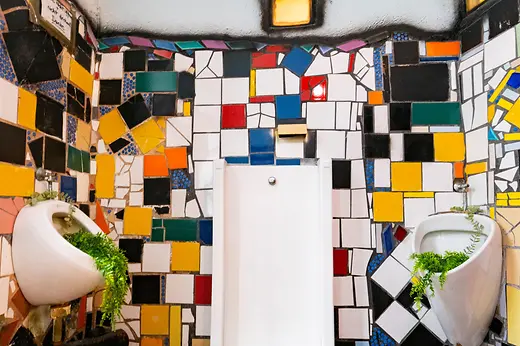
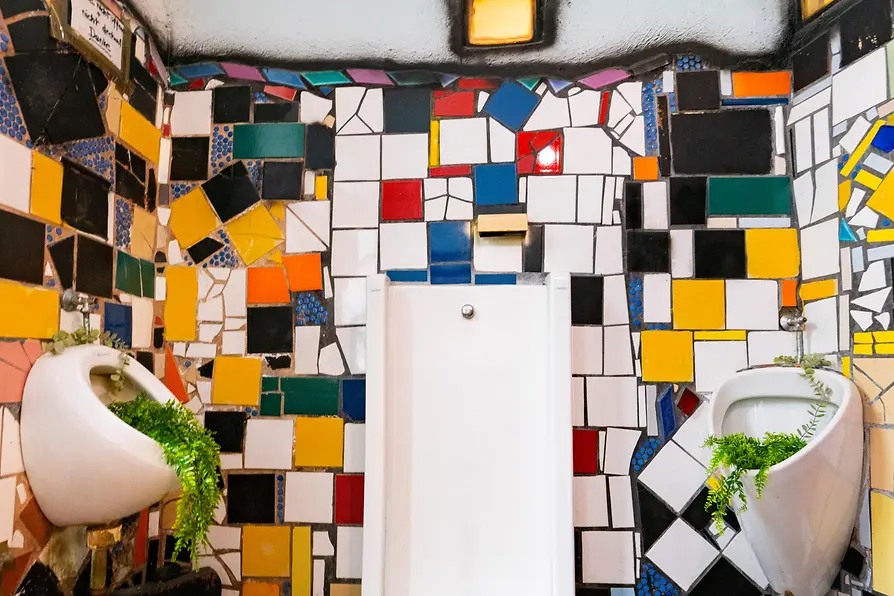
Vienna’s restrooms also fit in with their surroundings. For example, a restroom container on the popular Danube Canal features high-quality graffiti art, as a series of legal graffiti walls for street artists line the area. A resourceful souvenir shop owner opposite the Hundertwasserhaus in Vienna’s 3rd district has designed a publicly accessible restroom in the typically colorful Hundertwasser style.
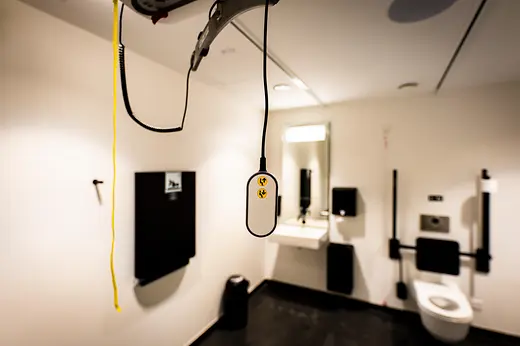
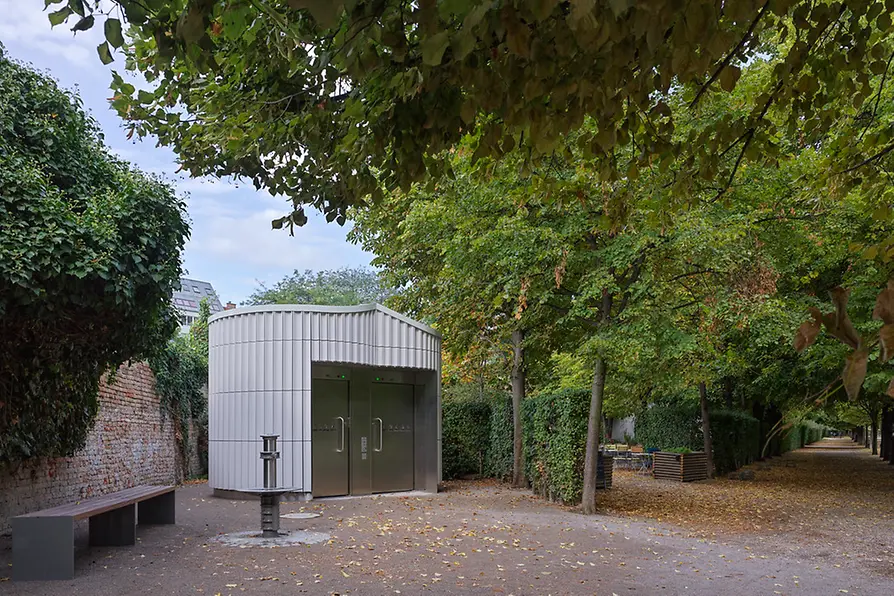
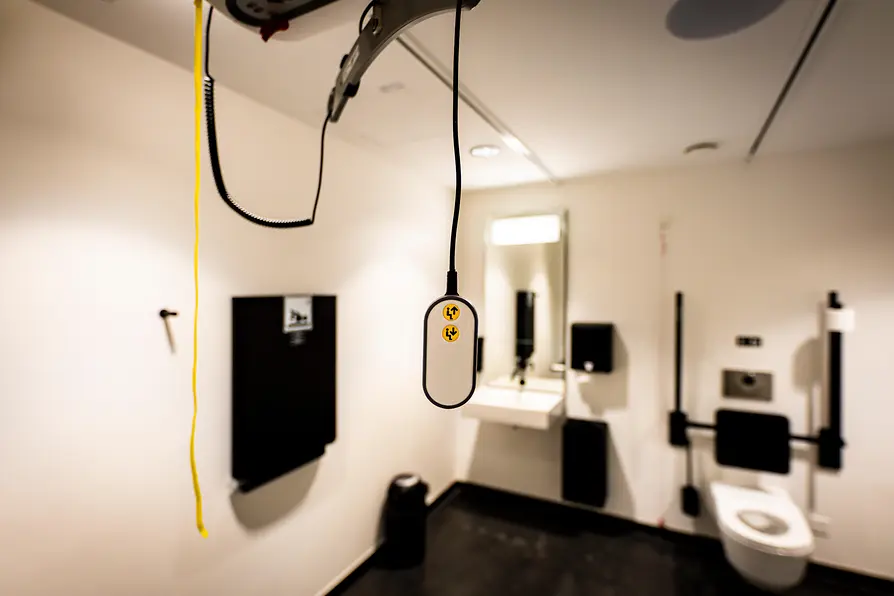
The new facilities that opened in October 2025 in the Augarten were designed by the architecture firm Zottlbuda and blend gently into the Baroque garden. And the Wien Museum has designed its “Toilet for All” to be completely accessible and has even integrated a ceiling lift and an adult changing station. This restroom is useable during the museum’s opening hours and is also free for visitors without a ticket.
From Vienna to the world: the path to sanitation innovation
Before the first public restroom facility opened in Vienna in 1883, people simply relieved themselves in the gutter, as was common in other major cities. In the 18th and 19th centuries, so-called bucket men and women offered a mobile service. They carried a wooden bucket, called a “Butte”, under a voluminous cloak and offered it for urgent relief with a bit of privacy.
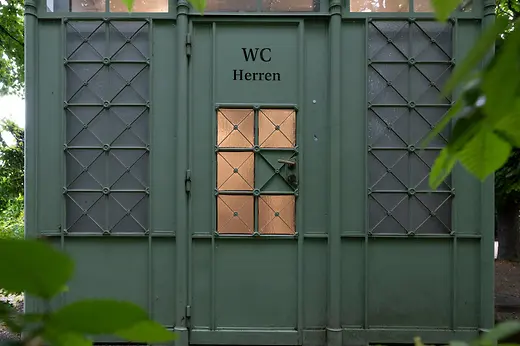
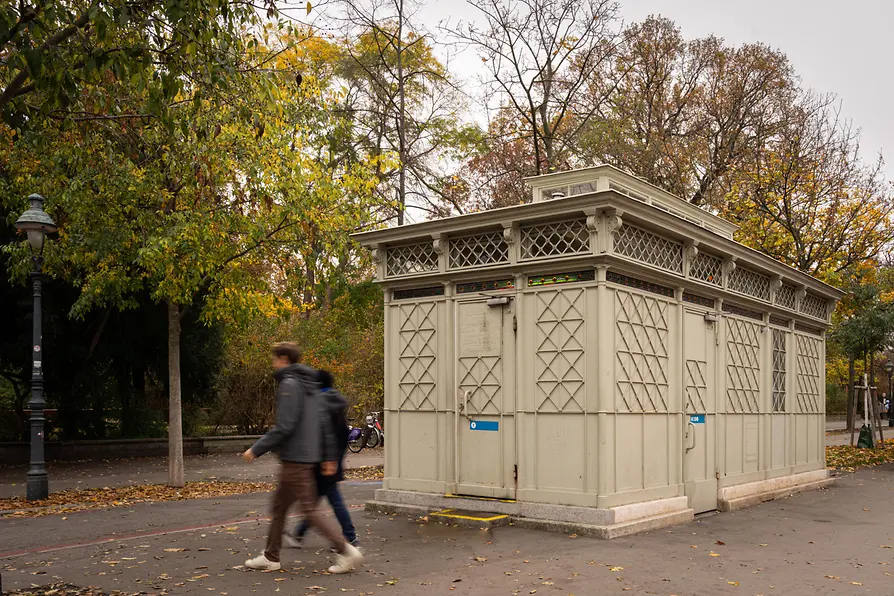
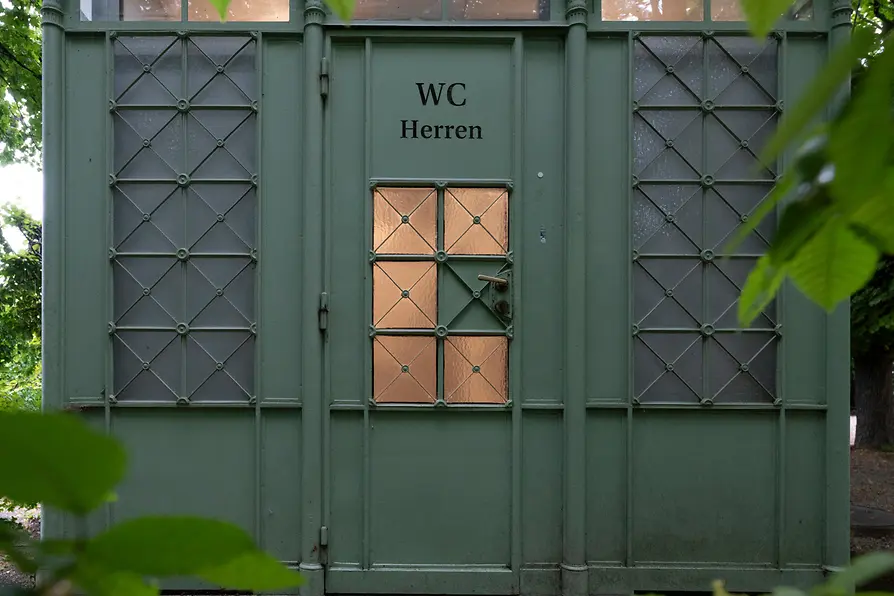
The Berlin entrepreneur Wilhelm Beetz eventually brought an innovation to Vienna when, in 1883, the first public restroom facility based on his designs opened in what is now the 3rd district, Landstraße. They quickly popped up all over the city. The oil trap developed by Beetz, which drastically reduced odors, was exported worldwide and used in Germany, Turkey, Mexico and South Africa.
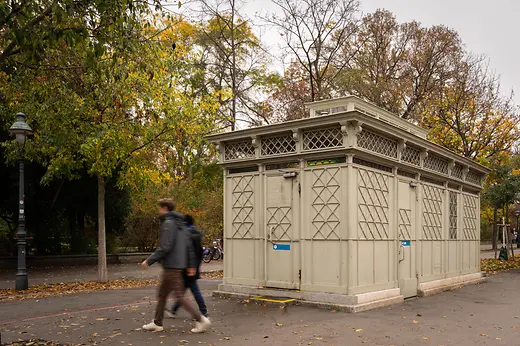
Even today, several facilities from the early 20th century are still in operation in Vienna, with a historic exterior and a modernized interior. They are recognizable by their gray or green metal facade on a concrete base, for example along the Vienna Ringstrasse (Parkring), in the Schönbrunn Palace Park and in Türkenschanzpark. Some of the urinal structures from that era, which resemble folding screens, still exist, for example in Auer-Welsbach Park or along the Alszeile.
- Resselpark, 1040 Wien
- karlsplatz.org
- Graben 22, 1010 Wien
- Schwedenplatz - Salztorbrücke, 1020 Wien
- Kegelgasse 34-38, 1030 Wien
- Obere Augartenstraße 1, 1020 Wien
- www.bundesgaerten.at
- office@bundesgaerten.at
- Karlsplatz 8, 1040 Wien
- www.wienmuseum.at
- service@wienmuseum.at
Vienna City Card
Discount valid on special exhibitions
Standard ticket price: 12€ or 8€ (depending on the exhibition) / reduced ticket price: 10€ or 6€
Tickets available online and on site
Buy now with discount:
Prices
- The permanent exhibition is accessible free of charge. Free admission to the special exhibitions on the upper floor for all under 19 and every first Sunday of the month.
Opening times
- Tu, 09:00 - 18:00
- We, 09:00 - 18:00
- Th, 09:00 - 21:00
- Fr, 09:00 - 18:00
- Sa, 10:00 - 18:00
- Su, 10:00 - 18:00
Closed on January 1; May, 1 and December, 25.
Accessibility
no steps
Parking spaces for people with disabilities
Maderstrasse 2 (directly behind the museum) and Resselgasse 2
Assistance dogs allowed
Accessible toilet
Wheelchair for rental, seats available. Guided tours in simple language, Austrian sign language, multi-sensory tours (e.g. touch, smell, hearing, sight) and slow tours.
All areas of the Wien Museum on Karlsplatz are accessible without steps and with a tactile floor guidance system.
Touch stations, overview plans, signposts and door signs are labeled in Braille and in tactile normal writing.
- Schönbrunner Schlossstraße, 1130 Wien
- www.schoenbrunn.at
- info@schoenbrunn.at
Vienna City Card
Classic Pass Plus (March 27 to November 2, 2026) € 75,00 instead of € 81,00
Classic Pass (July 1 to November 2, 2026): 42,00 instead of €49,00
Sisi Pass € 57,00 instead of € 60,00
Tickets online and on site.
Buy now with discount:
Opening times
- (Last entry: 16:15 h) daily, 08:30 - 17:00
- (Last entry: 16:45 h) daily, 08:30 - 17:30
- (Last entry: 16:15 h) daily, 08:30 - 17:00
Accessibility
no steps
Parking spaces for people with disabilities
at main entrance portal (Schönbrunner Schlossstrasse, 3 parking spaces), Meidlinger Tor (2 parking spaces), close to Kavalierstrakt as well as Valerietrakt (2 parking spaces) and Fürstenstöckl (1 parking space)
Assistance dogs allowed
Accessible toilet
Free wheelchair rental – contact attendant at main portal (3 wheelchairs) or at Hietzinger Tor and at Meidlinger Tor (1 wheelchair each). Supplemental devices available for the visually impaired. Tours for visitors with with disabilities or special needs on request. Museum Sign Language Guide available in ÖGS and IS for the Imperial or Grand Tour, prior reservation recommended, further information: https://www.schoenbrunn.at/en/visitor-information/barrier-free-access
Access to all exhibition rooms: no steps. Freight elevator for extra wide wheelchairs: door width: 160 cm, cabin depth: 220 cm, cabin width: 156 cm.
Ticket Center in the Gardetrakt by the main gate, stepless access, door width: approx. 144 cm, wheelchair-accessible restroom can be reached by wheelchair platform lift – platform 110/140 cm, door width: 90 cm in the corridor area and 94 cm to the outdoors, accessible from outside with a Euro-Key.